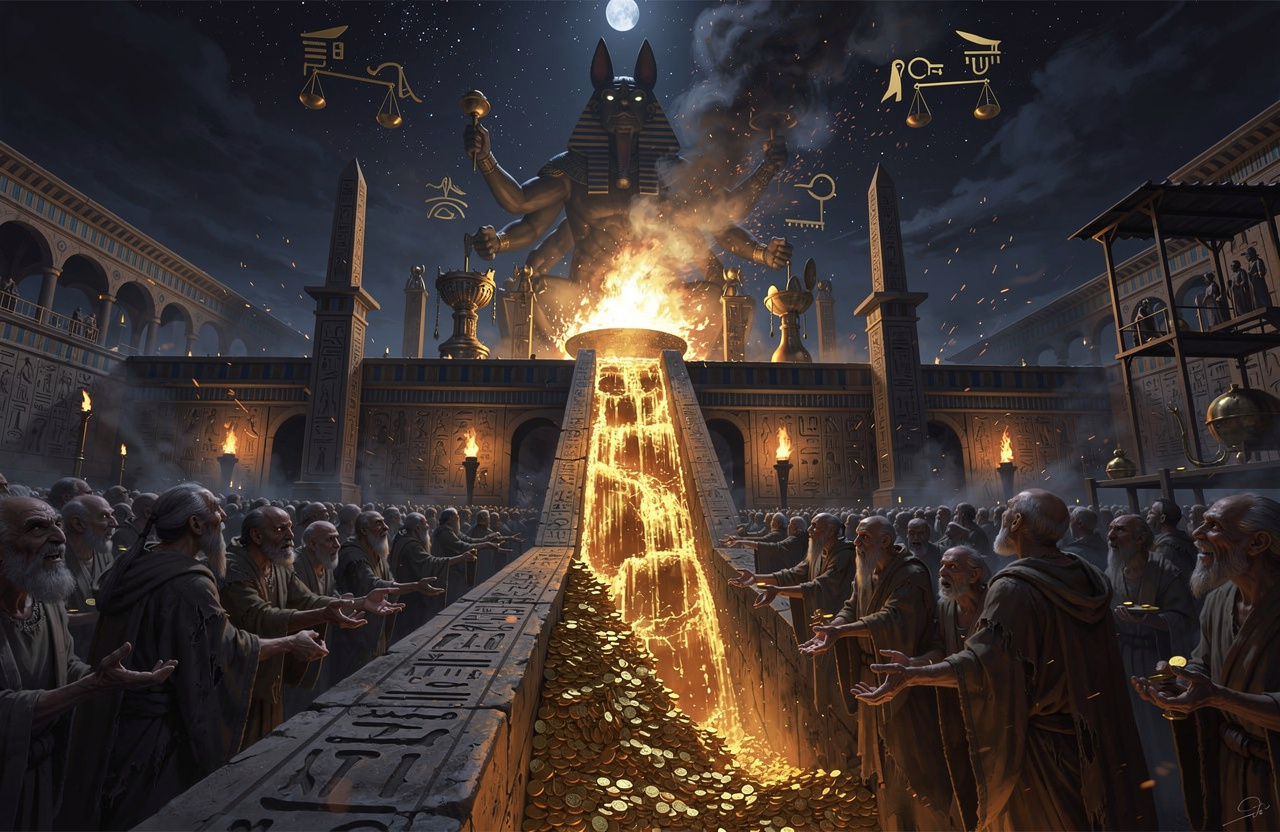
Here is the sleight of hand almost nobody notices. Every payday, a slice of your salary is routed — often automatically, sometimes before you can opt out — into your 401(k). It buys shares in funds. You feel like an owner. You have a login and a balance that mostly goes up. But your money didn't buy you power. It bought power for the people who manage the fund. You supplied the capital. They kept the vote. And they use that vote — your shares' vote — on questions where their interests and yours point in opposite directions.
Your retirement isn't just your nest egg. It's fuel. And you're pumping it into an engine you don't steer.
Follow the capital, then follow the vote
Start with how the 401(k) actually works. Since the decline of traditional pensions, most American retirement savings flow through 401(k)s and IRAs into mutual funds and index funds. That's trillions of dollars, contributed steadily, month after month, by tens of millions of workers who mostly pick a target-date fund once and never look again. It is one of the largest and most reliable rivers of capital in human history — and it is largely on autopilot.
Now: where does the river pool? Overwhelmingly into a handful of giant asset managers. BlackRock, Vanguard, and State Street together manage on the order of $20 trillion in assets. Through index funds, they end up as the largest shareholders in a huge fraction of major public companies — frequently among the top three owners of Apple, Microsoft, ExxonMobil, and thousands more, often holding 5, 7, sometimes over 10 percent of a company across their funds.
Here is the trick. When BlackRock's index fund owns 7 percent of a company using your retirement money, who votes those shares at the annual meeting? Not you. BlackRock. Vanguard votes its shares. State Street votes its shares. You own the economic interest; they own the political power that comes with it. Your capital, their voice.
The vote is the whole game
You might shrug — "I don't want to vote on corporate proxies anyway." Understand what you're waving off.
Shareholders vote on the things that decide how the economy actually runs. Executive pay packages. Board members. Mergers. Stock buybacks versus wages. Whether a company guts its workforce for a quarterly bump. The Big Three, voting the aggregated shares of millions of ordinary savers, hold decisive sway over these questions across the entire market at once. They can, in effect, set the tone for corporate governance economy-wide.
And whose interests do those votes serve? Not, structurally, yours as a worker. The asset manager's incentive is to keep corporate management friendly (that's how you win and keep the mandate to run a company's 401(k) plan), and to maximize the share price, which frequently means favoring buybacks and cost-cutting over wages and headcount. So the capital you set aside from your wages gets voted, again and again, in ways that suppress wages — including, sometimes, your own. Your future self funds decisions that squeeze your present self.
Read that twice. The system takes money out of your paycheck and uses the power attached to it to vote against the interests of the person whose paycheck it came from.
Our record
The Scales of Ma'at demand that voice and stake sit on the same pan — that the one who bears the weight holds the say. The 401(k) architecture splits them. You carry the risk; someone else carries the vote. That split is the imbalance. It is Isfet's favorite trick: take the substance, leave the shadow. You keep the Ba — the felt sense of ownership, the number on the screen. They take the Sekhem — the actual power that ownership is supposed to confer.
Watch the pump run. Your labor becomes wages. Your wages become forced contributions. Forced contributions become concentrated capital. Concentrated capital becomes votes. Votes become policy that suppresses labor. And the loop closes on itself — your own stored life-force, aimed back down at you as a lever of control. The many fuel the few, and the few steer the machine back over the many. That is the pump running upward, disguised as your safe retirement.
Name it, and the disguise slips.
Not evil geniuses — an emergent trap
Be precise: this isn't necessarily a conspiracy of villains. Index funds are, in many ways, a genuinely good deal for the individual saver — low fees, broad diversification, better than most active picking. The trap is emergent. When tens of millions of people each rationally pick the cheap, easy, diversified option, the aggregate is an unprecedented concentration of voting power in a few institutions that no single saver intended to create. It's a legacy system whose defaults produce an outcome nobody chose but everybody feeds.
That's actually good news. Emergent traps have emergent exits. You don't have to defeat a villain. You have to change the defaults.
The lever
Never doom without door. Here are the doors, from small to large.
First, know the seam exists. Some fund providers now offer pass-through or proxy voting — letting you direct how your shares are voted instead of leaving it entirely to the manager. It's early and imperfect, but it's a live lever where before there was none. Ask your provider. Use it if you have it.
Second, own things where the vote comes attached. Directly held shares, worker cooperatives, employee-owned firms, credit unions — structures where economic stake and governance stay welded together, the way Ma'at requires. The whole point is to stop separating your money from your voice.
Third, and deepest: this is precisely the problem decentralized ownership was invented to solve. In a well-designed DAO or on-chain cooperative, the token is the vote — you cannot own the stake and be silently stripped of the say, because they're the same object on the ledger. No intermediary sits between your capital and your voice, quietly voting your weight against you. That's not a slogan. It's the structural opposite of the 401(k) trap: not your keys, not your vote.
Your retirement should power your future — not vote against it. Reunite the stake and the say.
Own the vote, not just the balance.