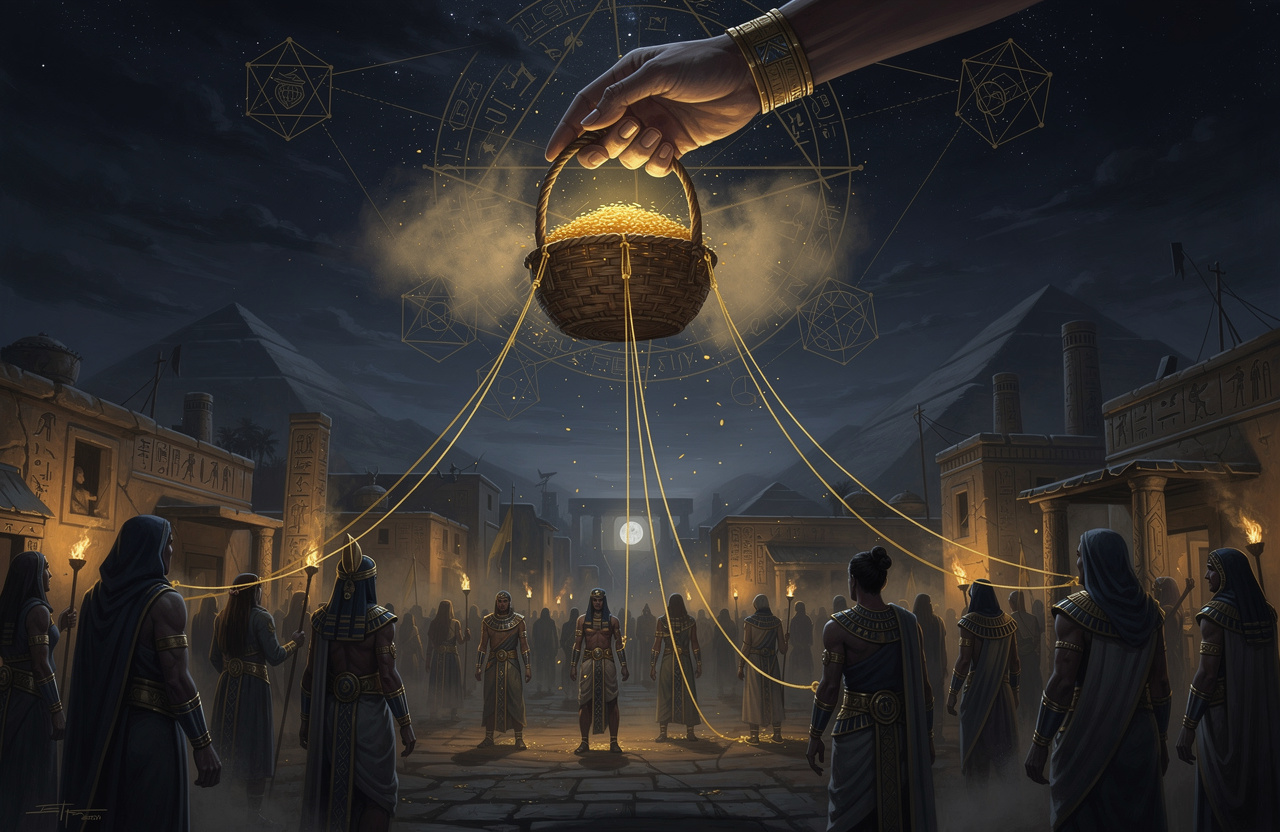
The word "aid" disarms you. Who could be against aid? Helping is good, refusing help is strange, criticizing help is almost indecent. That is precisely why the word works as perfect packaging. You can place anything inside it, and the wrapping will sanctify it all. But look closely at what lies inside "development aid," and you find not a gift but a very carefully built leash.
Aid that returns to the giver
Start with the most honest trick — tied aid. A donor country allocates money "for development," but on one condition: it must be spent on goods, services, and contractors from the donor country itself. The money is formally a gift — yet it returns home at once as orders for Western firms.
You get a neat loop. The donor's budget doesn't shrink: the money went out and came back to its own companies. The companies got the contract. The politician reported "billions in aid to the poor." And the recipient country did not build its own industry — it paid (often on credit) for someone else's. An engineer would call this a function call that returns its value to itself: generosity in, money back to whoever "gave" it.
Aid that comes with conditions
The second layer is conditions. Pure, no-strings grants are rare and small. Big money almost always arrives bundled with demands: open your markets, privatize state firms, scrap tariffs and subsidies for your own farmers and producers, cut social spending for "budget discipline."
Taken one by one, each demand sounds like a sensible economic reform. Together they produce a predictable result: local production, stripped of protection, cannot survive competition with cheap imports and collapses. A country that could feed itself gets hooked on imported food. Industry that could have grown is pushed out by finished imports. And now the country needs even more hard currency for purchases abroad — meaning even more raw-material exports and even more loans.
The aid seemingly helped. But there is less self-reliance and more dependency. The leash has gone taut.
Dependency as the goal, not a side effect
Here it's important not to slide into naivety. Not every donor is a villain with a plan of enslavement. Many specific people sincerely want good: doctors, engineers, volunteers. But the system is arranged so that its aggregate result does not depend on the good intentions of individual participants.
Because dependency is not a side effect. It is the product. A debtor who can't make ends meet without new loans is the ideal client: predictable, manageable, ready to agree to conditions. A country whose economy is hooked on imports and external financing does not argue at the negotiating table. It has much to lose and nothing to replace it with. Aid that makes the recipient self-reliant stops the flow of interest and orders. Aid that makes the recipient dependent prolongs that flow. The system naturally chooses the second — not out of malice, but out of the logic of self-preservation.
In the book's terms this is Isfet — the inversion of fair exchange. Honest help is when the strong share strength so the weak can stand up and stop needing help. Isfet-aid turns this inside out: it is built so the recipient never stands up, because someone standing on their own feet brings in no more revenue. This is not a gift — it is a subscription.
How to tell aid from a leash
The test is simple and worth keeping in mind. Real help strives to make itself unnecessary: to teach, to build, to hand over — and then leave, with the recipient stronger. Leash-aid strives to prolong itself: to tie you to supplies, to new tranches, to the need to come back again and again for money.
Ask of any program: does it make the recipient more self-reliant or more dependent? In ten years, will they be able to do without the donor — or will they need it even more? The answer to that question instantly separates the hand of help from the hand with the leash.
Where the ordinary person is in this
Everywhere there's the word "help" and a condition in fine print. This is not only about poor countries. It's also the "subsidized" mortgage you then pay off for twenty years. The "free" service that sells your data. The "social support" wired so you don't escape it, but get used to it. The pattern is one: you're given just enough to stay dependent, and not one gram more.
The answer: the MAAT token and DAO
Leash-aid rests on asymmetry: the giver knows what's in the bundle of conditions, while the recipient sees only the pretty wrapper, "billions for development." The information is on one side, the consequences on the other. As long as that asymmetry exists, aid will always come with a leash.
MAAT removes the asymmetry at the root. The MAAT token is membership in a cooperative with a transparent treasury: here there are no "conditions in fine print," because every movement of funds and every rule is visible to all in the DAO — a decentralized organization with no hidden center. And the decider is not whoever has the fatter wallet, but the community, by the rule one human, one vote, not "one dollar, one vote."
That is the difference between help and a leash, translated into architecture. Here you cannot "gift" in a way that secretly binds, because there are no secrets. The entry is simple: read the book, take the token, get the vote — and stop being the one who is "helped" just enough never to stand on their own feet.