You open the app. You tap "buy." Zero commission — free, they told you, and you believed them because the screen said so. Somewhere in the milliseconds between your tap and your fill, your order took a detour you never saw. It was sold. To a firm that looked at it before it executed. And that firm made money on the gap.
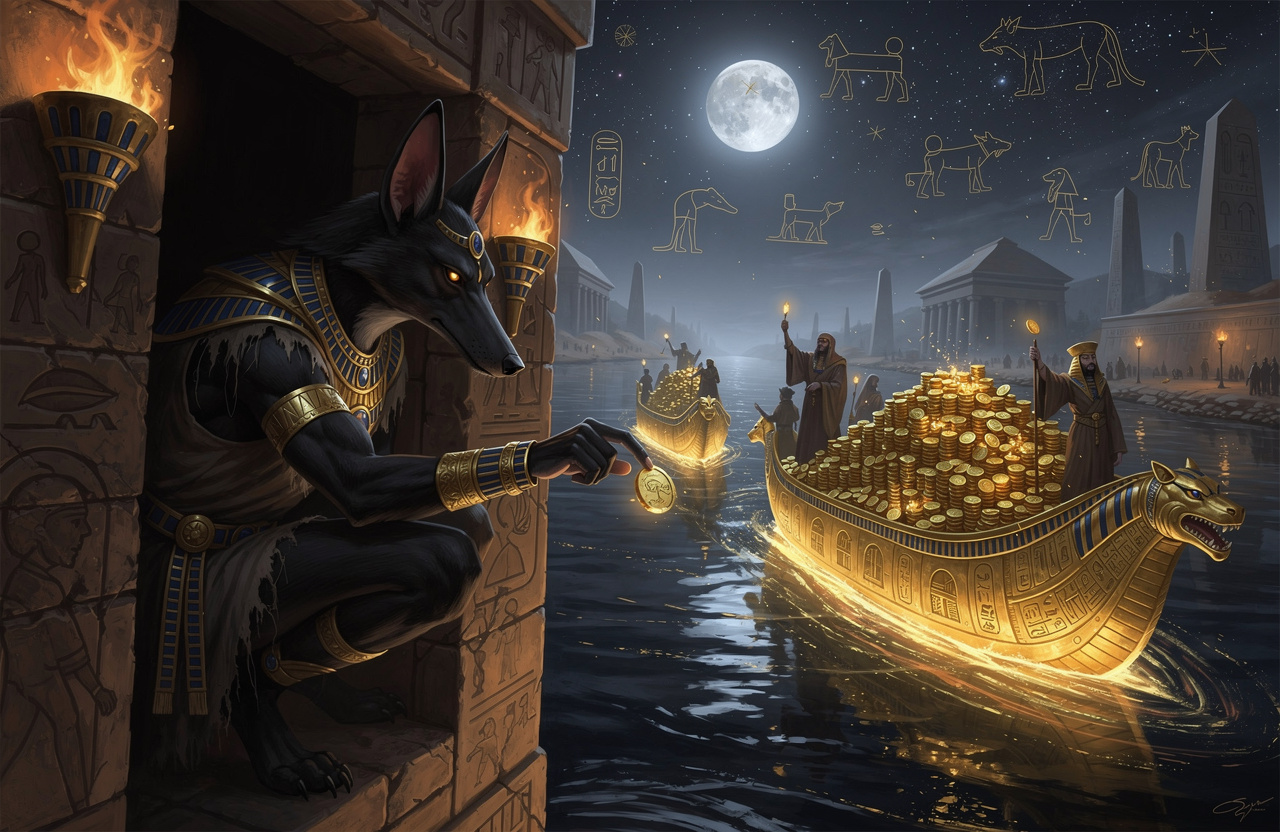
This is payment for order flow, and it is the reason your "free" brokerage is free. Your broker doesn't send your order straight to an exchange. It sells your order to a wholesale market maker — most famously Citadel Securities — which pays the broker for the privilege of handling it. You are not the customer. Your order is the product. You're the cargo, and the freight was paid by someone else.
Free trading isn't a gift. It's a business model where the thing being sold is you.
The middleman who sees the flow before it moves
Why would Citadel Securities pay hundreds of millions of dollars a year to brokers for the right to fill retail orders? Because seeing the flow is worth more than the fee it costs to buy it.
When you route a torrent of small orders through one firm, that firm sees demand forming before the wider market does. It sees the buys and sells of millions of retail accounts in real time. It knows the direction of the crowd a beat early. In markets, a beat early is everything. Information about what's about to happen is the most valuable commodity there is, and payment for order flow is a system for concentrating that information into a few private hands.
Citadel Securities has, in recent years, handled a huge share of U.S. retail equity volume — a single firm standing between a large fraction of ordinary buyers and sellers. It fills your order internally, capturing the spread between what you pay and what you'd have paid on a fully open, competitive book. Tiny per trade. Astronomical across billions of trades. The house edge, collected in fractions of a cent, at planetary scale.
Is it illegal front-running in the criminal sense? No. It's the legal, disclosed, regulator-blessed version: not trading ahead of a specific client's order, but standing at the chokepoint where all the orders pass and reading the river. Same river. Different name.
The chokepoint is the whole business
Here's the structure to hold in your mind. In an idealized open market, your order meets every other order on equal footing, and price emerges from that collision. Payment for order flow inserts a private party between you and that collision. Your order no longer arrives naked at the market. It arrives pre-read, pre-sorted, pre-monetized.
And this isn't just Citadel. The same founder, Ken Griffin, runs both Citadel Securities (the market maker that buys your flow) and Citadel (one of the largest hedge funds in the world). Two legally separate firms, same name, same origin, sitting near the center of both the plumbing of retail trading and the speculation on top of it. When one company is close to the pipe and close to the pool, you don't need a diagram to feel the gravity.
The elegance is that everyone downstream is happy. You got zero commission. The broker got paid. The market maker got the flow. Everybody won — except that the gap the market maker earns comes from somewhere, and it comes from the difference between the price you got and the price you'd have gotten in a market where nobody was standing at the chokepoint. You didn't see the toll because it was priced into the spread. Invisible fees are still fees.
Our Record
In the language of Maat, this is a violation at the level of the Weighing. The market is meant to be a place of honest measure — buyer and seller meeting so that price, the heart's true weight, can be read against the feather. Fair exchange is Maat. It is order made from the willingness of two parties who each see the same truth.
Payment for order flow breaks the symmetry. One party sees the flow; the other sees only the app. The Shadow Neteru don't rob you at the point of a knife — they stand at the narrow place where all the Sekhem of the crowd must pass, and they read it as it goes by. Serpent-logic again: Apep does not devour the whole river. It coils at the bend and takes its portion from every drop that rounds the corner.
The theft is not in any single trade. It's in the position — owning the bend in the river. Whoever holds the chokepoint holds a tax on the movement of everyone's life-force, collected so smoothly you file it under "free."
The lever: markets with no bend to coil at
Don't hear defeat in this. Hear the diagnosis, because the diagnosis points straight at the cure.
The whole scheme depends on one thing: a private intermediary sitting between you and settlement, who sees your order before it clears. Every dollar of that business is rent on opacity — on the fact that your order passes through a place you can't see, controlled by someone who can.
Remove the hidden middle and the rent evaporates. On a transparent, on-chain venue, settlement is the ledger — public, atomic, visible to all at once. There is no dark inbox where your order sits getting read before it executes. The order book and the fills are the same open record. You can't be sold what you can already see, and no one can coil at a bend that doesn't exist.
That's not a promise that DeFi is safe — it has its own predators, MEV bots that hunt in the open, and you must learn the terrain before you walk it. But the deep design difference is real: transparency by construction versus opacity as a business model. One of these can be audited by anyone. The other must be trusted, precisely because it can't be seen.
The old system tells you it's free while it reads your order in the dark. The new one shows you the whole book and asks you to hold your own keys. Learn where the chokepoint is. Then trade where there isn't one.