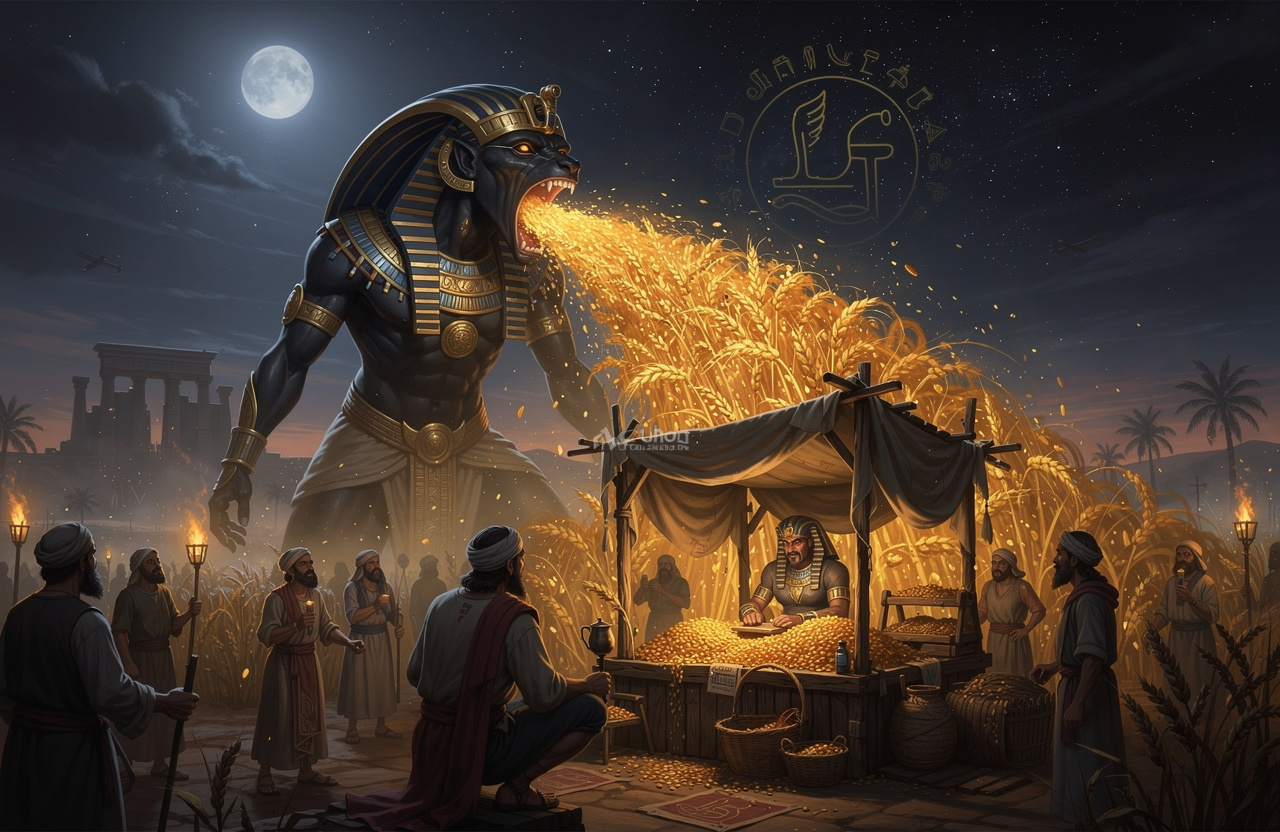
Every book you'll never write. Every song hummed into the void. Every Wikipedia edit, forum answer, open-source commit, blog post, recipe, and midnight rant — the accumulated exhaust of billions of human minds, poured freely into the commons over thirty years of the open web. That's the training data. That's what the models ate.
Then they put a subscription on the door.
Here is the maneuver in one sentence: the models were trained on the shared inheritance of humanity, and now access to that inheritance — refined, repackaged, and returned as an answer — is being privatized. Copyright was built to protect creators from having their work taken. This is copyright run in reverse: the work of everyone was taken to build a machine that competes with everyone, and the takers are the ones now holding the license.
The commons was the raw material
Understand what these models are actually made of. A large language model is not a mind. It's a compression of a corpus — a statistical distillation of an enormous body of human writing. The "knowledge" it seems to have is our knowledge, ground fine and averaged.
Where did the corpus come from? Common Crawl scrapes of the open web. Wikipedia, written by volunteers. Open-source code, shared under licenses that assumed reciprocity. Books — including, court filings allege, libraries of pirated ones. Reddit, Stack Overflow, the whole conversational sediment of the internet. Human writers, artists, and coders sued over exactly this: their work, used without consent, credit, or payment, to build a product that now undercuts them.
The commons was never free in the sense of worthless. It was free in the sense of shared — given on the understanding that it stayed open, that what you took you also gave back. The models honored the taking and skipped the giving back. They enclosed the commons and put a meter on it.
Enclosure is an old crime
This has happened before, and the pattern is exact. In England, the common lands — grazed, farmed, and lived on by whole villages for centuries — were fenced off by acts of enclosure, converted from shared resource to private property. The people who had lived off the commons for generations woke up trespassers on land that had been theirs. The value didn't vanish. It changed owners.
That's the template. Take a shared resource that everyone built and depends on. Fence it. Assert ownership. Then rent it back to the very people you took it from. The genius of the move is that the raw material cost you nothing — it was contributed freely by the whole species — and now you charge for access to a refined version of their own gift.
The AI enclosure is faster and cleaner than the fields ever were. No fences to build, no villagers to evict. Just scrape, train, and gate. And because the output is transformed — remixed, averaged, restated — the takers can claim it's something new, not the thing they took. That's the legal fog the whole industry is banking on.
Our record
The Egyptians imagined, before all things, the Nun — the primordial waters. The undifferentiated ocean of potential out of which the first mound rose and all creation unfolded. The Nun was not owned. It could not be owned. It was the shared source, the field of pure possibility that belonged to no one because it was prior to everyone.
The commons of human knowledge is a Nun of our own making. Thirty years of the open web, uncountable minds pouring their thought into a shared ocean — freely, in the old spirit of the source that belongs to all. From that ocean, mounds rose: Wikipedia, open source, the whole living reef of human collaboration.
To fence the Nun and sell buckets of it back — that is the deepest kind of Isfet. Not merely theft of a thing, but the privatization of the source itself. The Shadow Neteru's masterstroke is not to steal your possessions. It's to convince you that the ocean you were all born from is now private property, and you must pay to drink. The commons was the one thing that could not, in the old order, be owned. That's exactly why the enclosure targets it.
Why "transformative" is the magic word
The whole legal defense rests on one incantation: the output is transformative, therefore fair use, therefore no permission needed, no payment owed. And there's a real argument in there — a model doesn't store copies, it stores patterns. But watch how the word is used. It's Heka in a courtroom — a word chosen not to describe reality but to reshape it in your favor.
Because "transformative" is doing enormous work. It transforms the specific labor of millions of named people into an anonymous statistical soup, and in doing so it launders the origin clean. Once your sentence is one of a trillion inputs, averaged into a weight, who can prove it was yours? The transformation is the theft made untraceable. The model doesn't need to plagiarize any single work. It plagiarizes the commons as a whole, and the commons has no lawyer.
That's the trap. Copyright law was built to protect individual works against individual copying. It has no concept for the taking of everything, from everyone, all at once. The law is a legacy system, and the new machine was engineered precisely to run in the gap the old code never anticipated.
The lever
The door is real, and it's being built right now.
- Feed a different commons. The enclosure depends on the open commons being the only game. So build one that stays open by design — open datasets, open-weight models, licenses that force reciprocity. When knowledge is trained in the open and the models are shared back, the fence can't hold. Support open-weight and community AI over the black boxes. That's not charity. It's rebuilding the Nun so it stays the Nun.
- Demand attribution and return. Push for laws and norms that make training data transparent and route value back to contributors. If a model is built on the commons, the commons deserves a share. Some proposals — collective licensing, data dividends, contributor royalties — are ways to make the giving-back happen by design.
- License for reciprocity. When you create, choose licenses that require openness in return — copyleft, share-alike. Poison the enclosure by making your gift only usable if it stays a gift. Turn the taker's own logic against them.
- Own the models collectively. The endgame isn't stopping AI. It's owning it together. A model trained on the commons and owned by a cooperative or DAO returns the value to the people who made it possible. Not your model, not your knowledge — flip it: our model, our knowledge, held in common because that's where it came from.
They took the ocean everyone was born from and put a price on the water. The answer isn't to beg for a discount. It's to dig new wells that no one can fence — and keep them open.
The Nun cannot be owned. Refill it faster than they can enclose it.