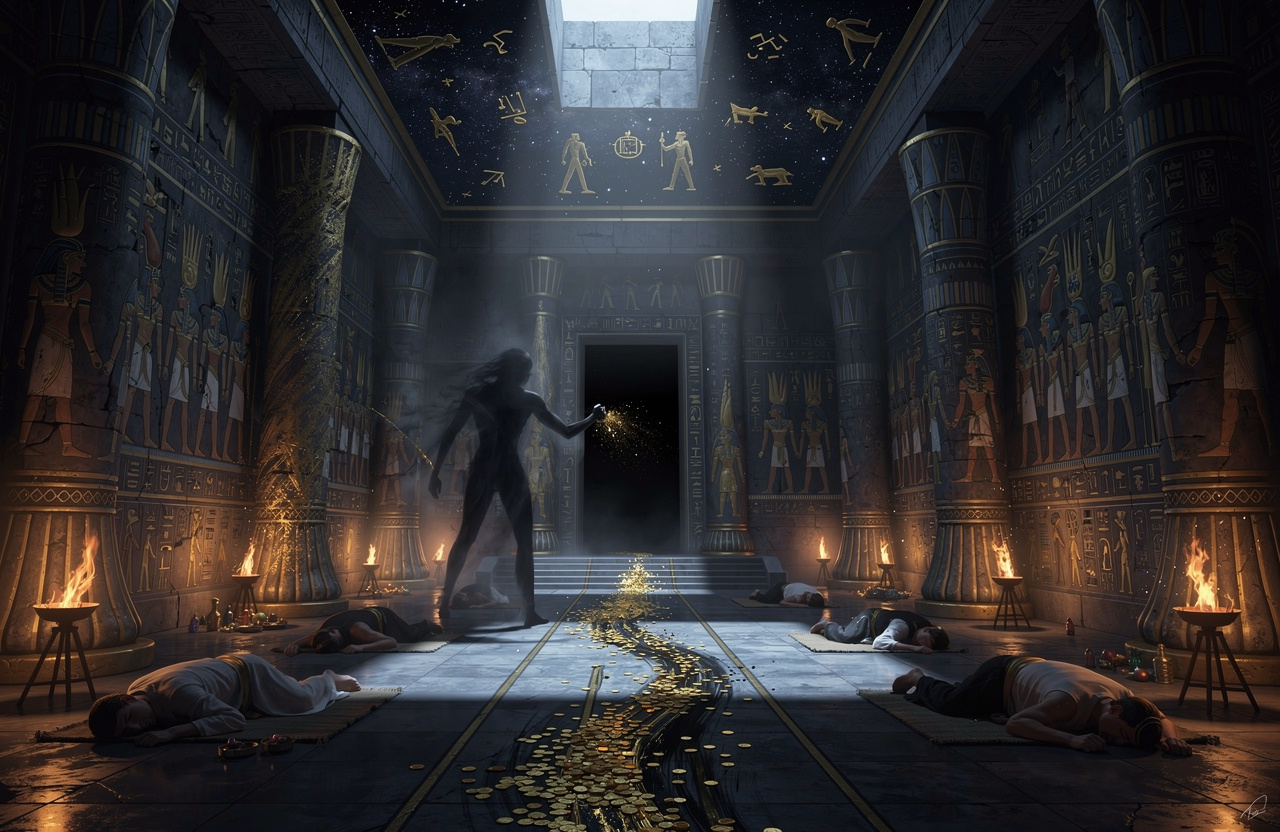
An Italian Marxist named Antonio Gramsci sat in prison turning over an awkward question. By theory, workers should have revolted long ago — they're exploited, after all. Yet they don't revolt. More than that, they sincerely support the very order that milks them. Why?
Gramsci gave an answer that outlived his theory and became a tool for everyone. Power, he said, doesn't rest on bayonets. Bayonets are expensive and provoke resistance. Real power rests on people considering the existing order natural. Not "just" — but self-evident, like the weather. This consent of the governed is what he called hegemony.
Power that became "common sense"
The brilliance of the trick is that hegemony doesn't look like coercion. It looks like common sense. "That's how the world works." "There's no other way." "Everyone lives like this." When a person defends an order that harms him with the words "well, how else?" — hegemony is working perfectly.
Gramsci noticed that this consent is maintained not by the army or the police but by what he called civil society — schools, churches, newspapers, culture, habits. These are power's "trenches." You can change the government in a day, but if the old common sense still sits in people's heads, everything snaps back. So the real struggle isn't for the palace, but for what people consider obvious.
In engineer's terms, hegemony is an operating system in the head. You didn't choose it; it was just there when you booted up. And all your "free" decisions run on top of it, within the frame it set. You argue about apps — but never touch the OS, because you don't notice it.
Why "Gramsci in reverse"
Gramsci conceived this as a weapon of the oppressed: seize the culture, the schools, the media — and power crumbles without any assault. But the scheme had a flaw. Any tool is taken up by whoever has more resources. And the resources sit with those who are already on top.
So came the twist that's called "Gramsci in reverse." It wasn't the bottom that captured culture to free itself. The top mastered Gramsci's recipe to entrench itself. Those same foundations, media holdings, and grant networks build hegemony in their own favor: they shape a common sense in which their dominance looks natural, inevitable, even benevolent.
It's an elegant inversion. The escape map drawn by the prisoner fell into the jailers' hands — and they used it to build stronger walls. What was meant as a way to wake people up became a way to put them to sleep more deeply.
What hegemony looks like today
Not slogans on walls — that's crude and dated. Today hegemony is dissolved into the background. Into which desires count as normal (consume, upgrade, keep up). Into which questions are never even asked (whom do I pay interest to? who owns everything at once?). Into "success" meaning money, and "freedom" meaning a choice between brands.
No one orders you to think this way. No order is needed — it's the air you've breathed since childhood. Advertising, TV series, school textbooks, feeds, conversations — all a little at a time, all in one direction. The book The Architecture of Chaos names a similar function directly: control of the Ib, control of meaning. The military holds the body and resources; the priests hold meaning. Whoever holds meaning needs no overseers: a person guards himself, sincerely mistaking someone else's order for his own.
Where fact ends and myth begins
Let's draw the line. Fact: Gramsci's concept is real, and the idea of "fighting for the culture, not just for power" has been openly adopted by very different forces — left, right, and corporations alike. Influence over schools, media, and language is a recognized political tool. Fact: people do more often defend the system out of habit than out of calculation.
Myth: that there's a single "hegemony committee" writing one common sense for everyone. Closer to reality is a picture of many struggling over whose common sense becomes the background. But again: whoever has more media, money, and platforms tends to win. Hegemony drifts toward the resource — not by command, but by weight.
Where is the ordinary person in all this
He carries someone else's operating system and takes it for his own mind. His "of course" was designed by someone, once. The unpleasant part: while the OS stays invisible, you can't argue with it — you can only argue with what you can see.
So the first step toward freedom is to notice the OS. Catch yourself at "how else?" and ask: who benefits from my treating this as obvious? That is naming it. A named hegemony stops being air and becomes an object you can finally do something about.
The answer: the MAAT token and DAO
Hegemony rests on us being scattered, each one alone mistaking someone else's common sense for his own. We have no shared trenches — schools, media, platforms — while the clans do. So the answer is to build our own trenches, our own network, where meaning is produced by the people themselves, not by a distant donor.
That is MAAT. The MAAT token is membership in a cooperative where scattered people gather together and gain, for the first time, the weight to produce shared meaning rather than receive it from above. The principle is strict: one human, one vote — not "one dollar, one vote." Decisions run through a DAO — a decentralized organization with a transparent treasury where every movement of funds is visible, and where the production of "common sense" can't be quietly bought. The entry is simple: read the book, take the token, get your vote — and swap the borrowed operating system in your head for one you chose yourself.