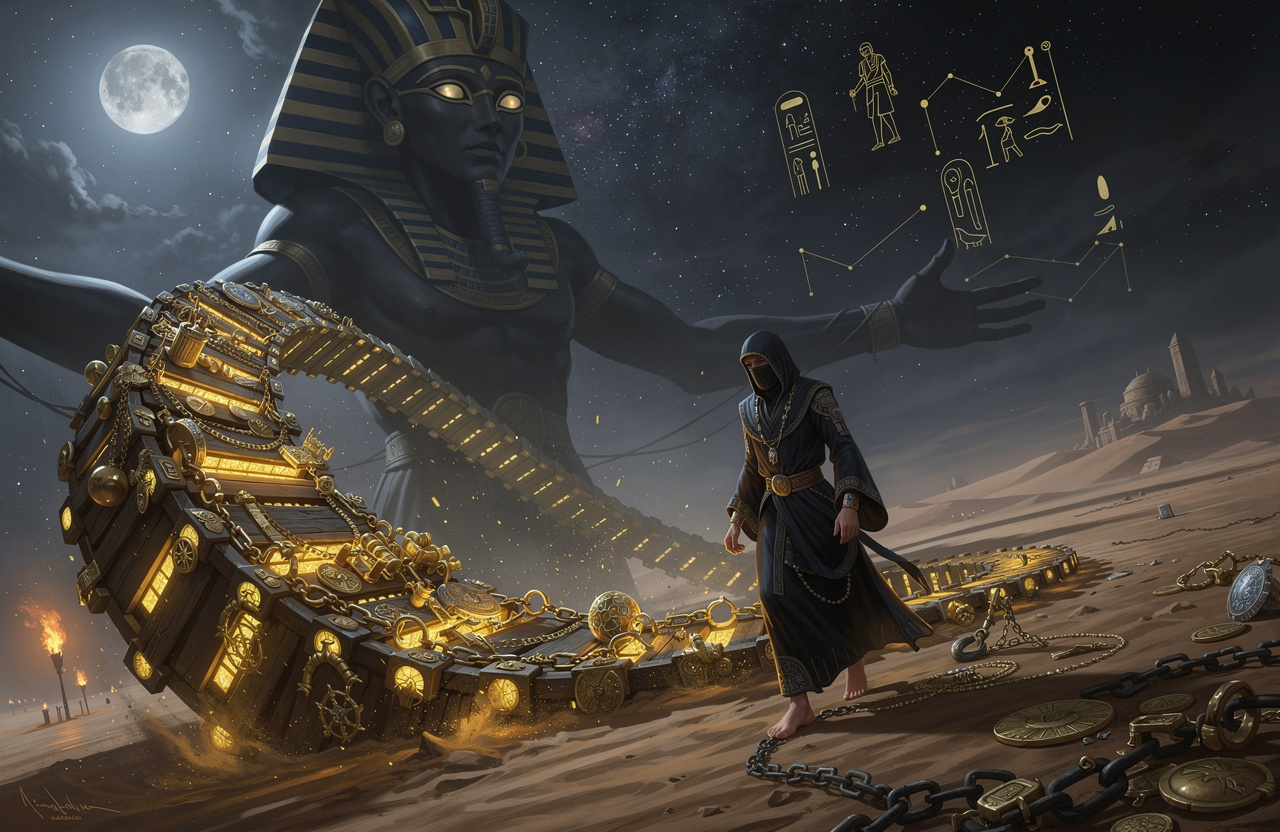
Here's a number that should stop you cold. The average person now sees between four and ten thousand ads a day. Not a typo. Every screen, every feed, every billboard, every pre-roll — a constant drip whose single purpose is to make you feel that what you have is not enough. You wake up satisfied. By lunch, an algorithm has convinced you there's a hole in your life shaped exactly like a product.
That's the loop. Work to earn. Earn to spend. Spend to fill a lack that was installed in you on purpose. Then wake up empty and do it again. Work-spend-repeat. It's the most efficient machine ever built, and you are both the fuel and the exhaust.
This is not a guilt trip about your coffee. This is a jailbreak. Deconsumerism isn't poverty or hair-shirt denial — it's cutting the wires between "I saw it" and "I bought it," so that your money, your hours, your life-force stop pouring into a hole someone else dug. Let's cut those wires one at a time.
The loop is not your nature — it's an install
You were not born wanting a newer phone. That want was manufactured, tested, A/B optimized, and beamed into you. The genius of the modern consumer economy is that it doesn't sell you products — it sells you dissatisfaction, and then rents you the temporary cure.
Our record: every manufactured need is a small hook in your Ba — your soul — and the chain runs straight to someone else's ledger. Isfet here doesn't roar. It whispers, endlessly, you are not enough yet. The lie is the loop. And the loop only holds because it stays invisible. Name it — "this craving was installed, it is not mine" — and a link in the chain cracks. That crack is where freedom starts.
Understand this and everything shifts: reducing what you consume isn't deprivation. It's uninstalling malware that's been running in the background of your mind, eating your Sekhem, spiking your fan, draining your battery. You're not giving something up. You're getting your processor back.
Step one: audit the flow, not the stuff
Don't start by throwing things away — that's just consumerism in reverse, a shopping spree for emptiness. Start by watching where the money and attention actually go.
For one week, log every purchase. Not to judge it — to see it. Beside each one, write a single word: need or hook. Need is food, rent, medicine, tools you use. Hook is the thing you bought because a feeling told you to. Most people are stunned by how much of their spend is hooks. That stun is the whole point. You can't cut a wire you can't see.
Step two: install the pause
The loop runs on speed. See it, want it, tap, own it — the whole cycle now takes eight seconds and one thumb. The single most powerful move in deconsumerism is to jam a delay into that pipeline.
The rule is simple: any non-essential purchase waits. Small things, sleep on it one night. Bigger things, thirty days. Put it on a list, set a date, walk away. Here's the magic: the overwhelming majority of wants evaporate in the wait. They were never yours. They were an ad's echo, and echoes fade. What survives thirty days is usually a real want — and that one you buy with a clear head, on your terms, not the algorithm's.
You just moved from impulse to intention. That's the whole war, won at the smallest scale.
Step three: unhook your identity from your cart
The deepest version of the loop tells you that you are what you buy. The brand is your personality. The upgrade is your status. This is the con that keeps people running the treadmill long after the money stopped making them happier.
So ask the hard question of any purchase: am I buying the thing, or am I buying who I think it makes me? A tool you'll use, buy it well and keep it for a decade. But a thing bought to be a certain kind of person — that's the hook set deepest, and it never delivers, because the moment you own it the ad has already moved the goalposts. That's not a bug in you. It's the business model.
When you stop outsourcing your identity to your cart, an incredible thing happens: you need dramatically less, and you're dramatically more content. The two move together. Contentment is the exploit the whole system was built to prevent.
Step four: convert freed money into freedom
Here's where deconsumerism stops being about less and starts being about more. Every hook you cut frees cash and hours. Don't let that surplus leak back into new hooks. Route it — deliberately — toward the things that actually buy freedom: paying down debt, building the emergency floor, owning a productive asset, funding a skill, buying time.
This is the flip. The work-spend-repeat loop is a machine that turns your life into someone else's profit. Deconsumerism, done right, is you seizing the machine and pointing it back at your own liberation. Same hours worked — but now they build your house instead of renting you a cage.
You're not shrinking your life — you're widening it
Let's kill the myth. Deconsumerism isn't a smaller, grayer, sadder life. Ask anyone who's done it. Fewer objects, more room. Less noise, more signal. Less chasing, more of the handful of things that actually light you up. You stop mistaking acquisition for living — and living, it turns out, was underneath the whole time, waiting for the ad-noise to clear.
The pharaohs took almost nothing into the tomb, and what they took, they chose with total deliberation. That's the posture: not deprivation, but ruthless, joyful selectivity. Own your few real things. Cut the thousand fake wants. Walk lighter.
You are not the exhaust of someone else's machine. You are the one who gets to decide what enough looks like — and the moment you decide, the ads lose their grip.
Your action for today
Right now, open the last thirty days of your bank or card statement. Go line by line and mark each purchase need or hook. Don't judge — just see. Add up the hooks.
Then pick one recurring hook — one — and cut it today. Unsubscribe from the shopping email that triggers it, delete the app that feeds it, or set a hard thirty-day pause rule and write it where you'll see it. One wire, cut today.
That's the loop, broken at one point. Break one, and you'll find you can break the next. Freedom compounds the same way spending used to.