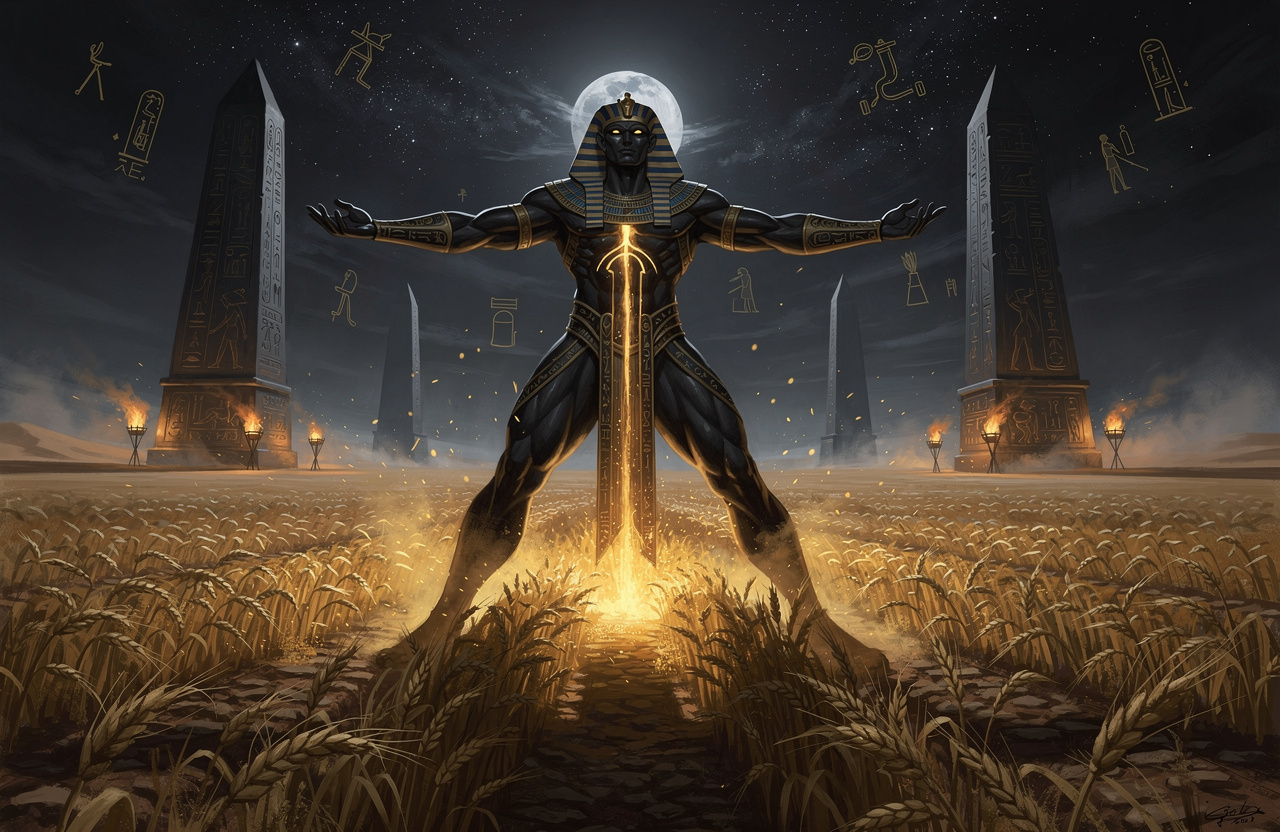
Ask a room who owns the most farmland in America and you'll hear guesses about ranching dynasties or foreign sovereign funds. The answer is a software founder. Bill Gates — through a web of holding entities — is reported to hold on the order of 270,000 acres of farmland across roughly a dozen-plus states. Not for the view. For what grows on it, and for what it is.
Look at the number. Then look at the pattern underneath it, because the pattern is bigger than one man.
Why the richest buy dirt
Farmland is the least glamorous asset there is. No app, no ticker on the evening news, no glow. And that is exactly why the very wealthy are quietly moving into it.
Farmland does three things almost nothing else does at once. It produces a real, physical yield every year — food, which people buy in every economy, in every crisis. It holds value when currencies wobble, because an acre of Iowa topsoil doesn't get printed into oblivion. And it is scarce in the hardest possible way — they are not making more of it, and the good stuff is already spoken for.
So while you were told to chase growth stocks, the people at the top were buying the ground the food grows in. Gates is the visible tip. Behind and around him: pension funds, insurance giants, sovereign wealth funds, and dedicated farmland-investment vehicles, all treating cropland as a stable, inflation-resistant "real asset." Institutional money in U.S. farmland runs into the tens of billions of dollars and keeps climbing. The land didn't change. The owner is changing — from the family that works it to the fund that books it.
Food as an asset class
Here's the shift that matters, and it's subtle.
For most of history, farmland was owned by the people who farmed it. Owner and worker were the same body. Now that link is being severed at scale. The land becomes an investment held far away; the farming becomes a service performed on it by someone who rents the ground or works it on contract. The person who grows your food no longer owns the field. The person who owns the field has never touched the soil.
When food becomes an asset class, a chain of quiet consequences follows. Rent on farmland gets set to maximize return to the owner, which squeezes the actual farmer's margin. Young farmers — who could once buy in — find land priced not by what it yields in crops but by what it yields as a financial instrument, bid up by capital they cannot match. Ownership concentrates. And the most fundamental thing a civilization has — the ground its meals come from — drifts into fewer and fewer hands, each of them optimizing for yield-on-capital, not yield-on-plate.
None of this requires anyone to be a villain. It only requires that food-producing land be legible as an investment. Once it's on the same menu as bonds and buildings, capital flows toward it by gravity. Legacy incentive, doing exactly what it does.
The most sovereign asset
Understand what land really is, because it is not like the other things on the balance sheet.
A stock is a claim on a company that could vanish. A currency is a promise that could be printed to nothing. But land under crops is sovereignty in physical form. Whoever owns the field owns a share of the answer to the oldest question a people ever asks: will we eat, and on whose terms?
That is why land has always been the base layer under every empire — the thing kings, temples, and republics fought over before there was money to fight over. It is the root asset. Everything financial is a derivative built on top of it. And right now the root asset is being quietly re-titled, from the many who work it to the few who model it.
Our record
Set it on the scale. On one pan: the field, the harvest, the bread — the most literal Sekhem there is, life-force you can chew. Grain was sacred on the Nile for exactly this reason: it is Ka you can hold in your hand. On the other pan: a return target in a spreadsheet.
Isfet loves this trade above almost any other, because food is the need with no substitute. You can leave the city. You can refuse the app. You cannot stop eating. So the pump seeks the field — the one place your Ka must pass through every single day — and installs a toll there, converting the harvest of the many into the yield of the few. The soil still gives freely. It is the deed that decides who the gift is for.
Name it. This is not "agricultural investment." This is the root asset of survival, changing hands away from the hands that feed you.
Where the lever is
No despair. A door — and this door is unusually open.
Follow the deed, not the crop. When you read about food prices, ask who owns the land underneath. The story of your grocery bill starts at the title office, not the checkout. Naming the owner of the field is the first act of taking it seriously.
Back the people who still farm. Buy from cooperatives, community-supported agriculture, regional growers who own their own ground. Every dollar routed to a farmer-owner instead of a fund-owner keeps a field in the hands that work it. That is Sekhem flowing back down to the source.
Own the ground in common. Agrarian land trusts and farmland cooperatives exist precisely to pull cropland out of the financial-asset pool and hold it for the people who grow on it. Slow, unglamorous, real. Land held in common is land the pump cannot re-title.
Grow something. Even small. A garden, a plot, a share in a local farm. The point is not self-sufficiency — it's remembering, in your own hands, that food comes from ground, not from a fund. Knowledge no one can foreclose.
The field is the oldest ledger there is, and it is being rewritten right now. You don't have to buy 270,000 acres to have a stake in that ledger. You have to know it's being written — and put your hand on the pen where you can.
Land is the root. Hold the root, and hold it together.