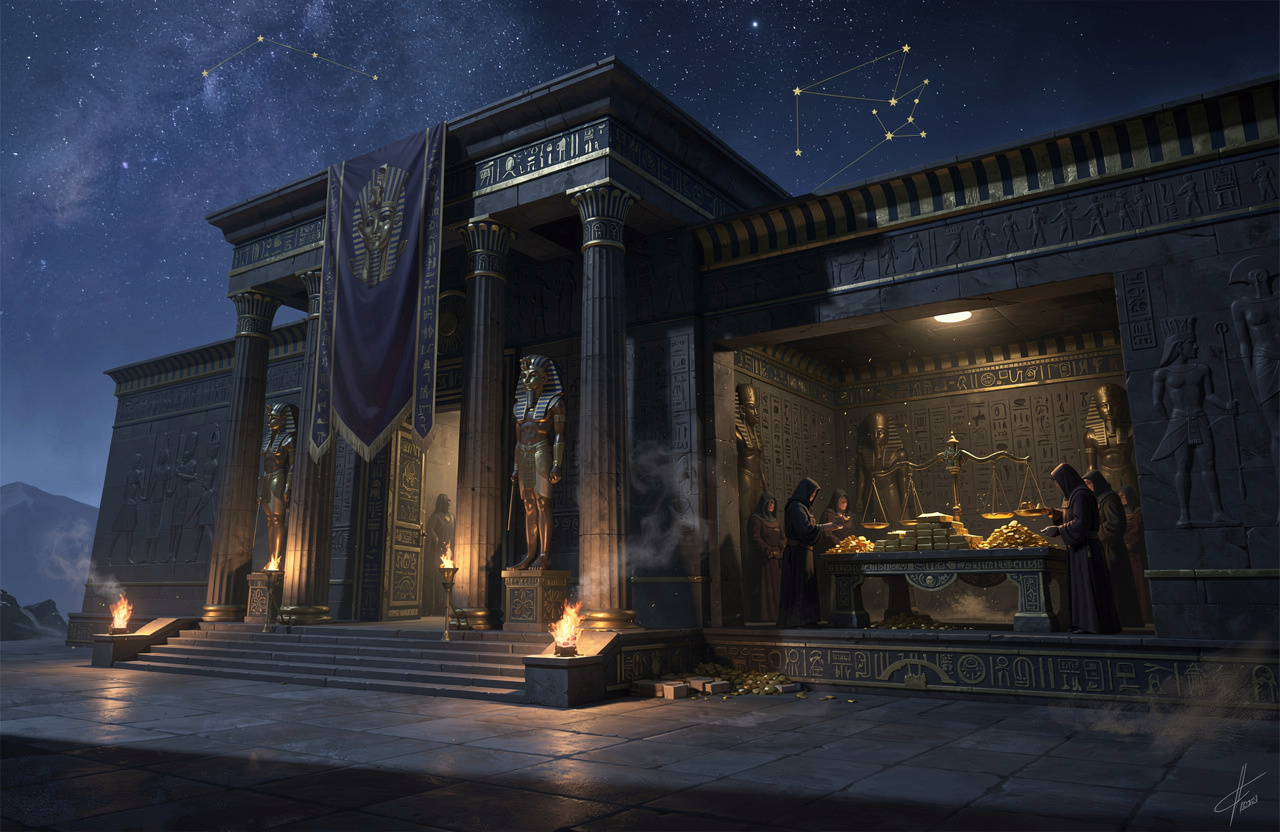
"The Fed is a private shop!" shout some. "The Fed is a government body!" answer others. The argument is like a holy war over whether a product is open-source or proprietary, where both sides are half right and therefore never agree. Let's drop the slogans and go by the documents and the architecture. Because the truth here is not "either-or" but "both at once" — and that hybrid is exactly the interesting part.
How the Fed is built on paper
The Federal Reserve System was created by the 1913 act and consists of several layers. At the top sits the Board of Governors in Washington: a federal agency whose chair and members are appointed by the president and confirmed by the Senate. That is the public part.
Below it are twelve regional Federal Reserve Banks (New York, Chicago, San Francisco, and so on). And here the subtlety begins. These twelve banks are organized as corporations, and their shareholders are the commercial banks of their district. To be a member bank, you have to buy stock in your regional Reserve Bank. So the formal owners of the regional reserve banks are private banks, not the state.
Add to this: monetary policy decisions (the rate, the scale of operations) are made by the Federal Open Market Committee (FOMC), which includes both the government-appointed governors and the presidents of the regional banks — that is, people from the privately capitalized part of the system.
A hybrid, not "either-or"
Now the honest conclusion. Fact: calling the Fed simply "public" is wrong — its regional banks are owned by private commercial banks, not the treasury. Fact: calling it simply "the Rothschilds' private shop" is also a myth: the top is appointed by the government, profit above a fixed dividend is remitted to the treasury, and its powers are granted by law.
The reality is a hybrid. The Fed is a publicly framed structure with private innards. On the outside: a seal, a status, the word "Federal," creating the impression of an ordinary state body. On the inside: the ownership and interests of commercial banks. It is precisely this duality that lets it be conveniently elusive: accused of being private, it shows the public sign; pressed for democratic accountability, it invokes "independence from politics."
The book calls this a hidden name. To name the thing by its true name — "a private consortium in public wrapping" — is to begin stripping it of its halo as a neutral arbiter.
The 6% dividend and who earns what
A specific that both sides of the argument like to omit. By law, member banks receive a dividend on their stock in the regional Reserve Bank (historically around 6% a year for large banks). The rest of the Fed's profit, which is enormous, is indeed remitted to the U.S. Treasury. So no, the Fed does not "pocket everything."
But it isn't about the dividend as such. The real value for the big banks is not 6% but the right to sit inside the circuit that sets the cost of money for everyone else. Access to the liquidity window, influence over policy, the status of "systemically important." That is power no single dividend line can capture. The "private or public" debate conveniently distracts from a far sharper question: who actually influences the decisions, and in whose interest do they come out.
Why this matters more than terminology
What matters is not the label but the function. The Fed manages money issuance and reserves in a fractional-reserve system, where money is created "out of thin air" when loans are made, and since 2020 the required reserve ratio in the U.S. has been zero. Whoever stands at that lever influences inflation, the cost of credit, and who gets the freshly created liquidity first (and who receives the already-cheapened money last). That is the real power — and it is arranged to stay half in shadow, not quite public and not quite private.
Where is the ordinary person in this
Outside every circuit. He appoints no governors, owns no reserve-bank stock, sits on no FOMC. He takes the consequences: inflation, the mortgage rate, the erosion of his savings. The fresh money reaches him last — already devalued in the cost of living. For him the debate "is the Fed private or public" is academic: in both answers, he is not at the table.
The answer: the MAAT token and DAO
The lesson is simple: the danger is less the form of ownership than the opacity and the lack of accountability to those whom the decisions affect. The cure is not to "nationalize the Fed" or "privatize it more honestly," but to build parallel structures where power over shared resources is transparent and distributed.
That is MAAT. The MAAT token is membership in a cooperative and a vote under the principle of one human, one vote, not "one dollar, one vote." Governance runs through a DAO — a decentralized organization with a transparent treasury, where there is no hybrid ambiguity: the rules are written in open code, every movement of funds is visible in the ledger, and you cannot hide behind a state sign while serving private interests at the same time. Where the Fed lives in a convenient fog between private and public, MAAT is transparent by construction. The entry is simple: read the book, take the token, get your vote — and finally be inside the circuit, not just beneath its consequences.