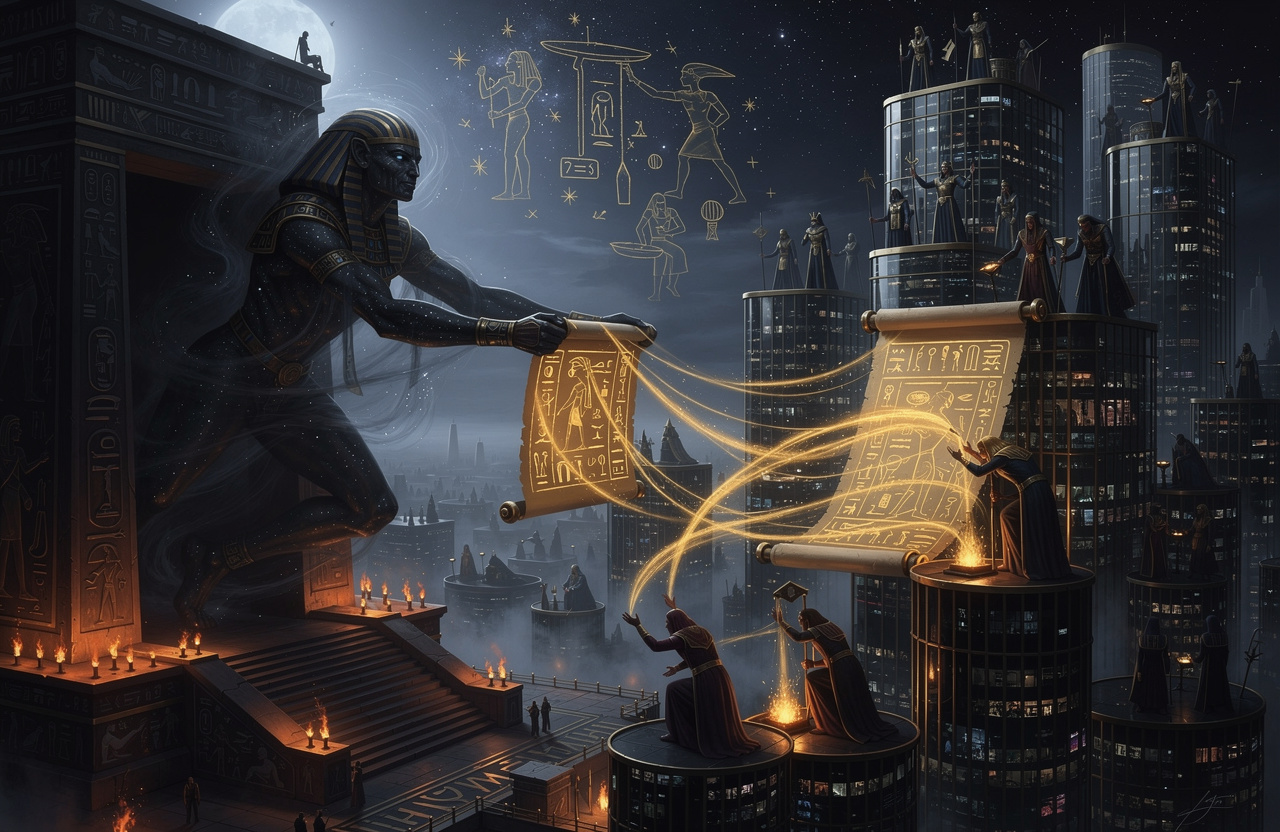
Once a year, the head of BlackRock, Larry Fink, sits down and writes a letter. Not to one person — to all of them at once. The letter is addressed to the chief executives of the world's largest companies, and in it he calmly explains what they ought to focus on: long-term strategy, climate, sustainability, responsibility. The tone is polite, almost fatherly. No threats, no orders. Just the reflections of a respected man on the future of capitalism.
And the entire corporate press pulls the letter apart line by line. Because when your largest shareholder writes to you, it isn't reflection. It's an instruction.
Why a letter is not just a letter
Recall the arithmetic. BlackRock holds around 7% of nearly every large company. At the shareholder meeting, BlackRock is one of those who decide who stays on the board, whether the CEO's bonus is approved, whether a strategy is adopted.
Now put yourself in that CEO's chair. You receive an annual letter from a man whose company owns a solid chunk of your shares and votes on your reappointment. The letter is formally non-binding. But you understand perfectly: if you ignore the "wishes" of your largest shareholder, at the next meeting that shareholder might vote against you. Your seat is at risk.
That is soft dictatorship. Not an order at gunpoint, but "advice" you cannot refuse, because the adviser has a hand on your reappointment. In IT it's familiar: when the tech lead who controls your review "recommends" something, that's not a recommendation. It's a task with a polite wording.
One man no one elected
Pause and weigh the scale. Larry Fink is a private citizen. He was elected by no one, in no election. He founded BlackRock in 1988 as a startup of eight people, the son of a shoe-store owner, and rose by inventing and buying up asset management. And this private man, once a year, sets the agenda for thousands of companies that employ millions of people worldwide.
No parliament voted to let Fink define the priorities of the global economy. No voter ticked a box next to his name. Yet the influence granted by his control over eleven trillion dollars of other people's money is greater than that of many elected governments. A country's president changes every four or five years and answers to voters. Fink doesn't change and answers to no one — except the ring of mutual ownership we examined separately.
"But he writes about good things"
A fair objection arises. Fink writes about sustainability, climate, long-term thinking. Isn't that good? Maybe it's good that someone influential pushes corporations to think past the next quarter.
The problem isn't the content of any one letter. The problem is the mechanism itself. Today the largest shareholder softly demands "think about the climate." Tomorrow, in the same tone, he could demand anything — and companies will have no choice, because the lever is the same. Power that depends on the goodwill of one man is not order; it's a lottery. Today the will is benign, tomorrow it isn't, and the instrument of coercion is identical.
And don't forget the main thing: he writes beautifully, while BlackRock votes as usual — for buybacks, for bonuses, for "optimization." A letter about a sustainable future and actual votes for quarterly profit coexist just fine. Again, mimicry: the tone of a kindly mentor laid over the machinery of extraction.
Whose voice is this, anyway
And here is the most galling part. The power of Fink's letter is borrowed. It is built on your money. Those eleven trillion are the pensions, insurance, and savings of millions of people. Fink writes his letters with an authority you gave him, without ever choosing to. Your vote was collected, handed to BlackRock — and now that same vote, packaged into an annual letter, dictates terms to the companies you work for and whose shares are formally, partly, yours.
You are the battery powering someone else's microphone. Fink speaks into that microphone. The energy is yours.
Where is the ordinary person here
Nowhere in this correspondence are you present. CEOs receive letters. Fink receives influence. You receive the consequences — corporate strategy you had no say in. Between your labor and the decision that shapes it stands a polite man with an annual letter, and he holds the microphone.
But since his power is borrowed, it can be recalled. A vote that was given can be taken back.
What to do about it: the MAAT token and DAO
Fink's letters work because millions of votes are gathered in one pair of hands and speak with a single voice — his. The symmetric answer: gather the votes back to the people and let them speak with their own voice, transparently and without an intermediary.
That is MAAT. The MAAT token is membership in a cooperative and a single vote. Not "one dollar, one vote" like the funds, where the letter is written by whoever has more money, but one human, one vote. Decisions are made in a DAO — a decentralized organization with a transparent treasury, where the agenda is set not by one private man but by the community itself, and every movement of funds and every vote is visible in an open ledger.
Imagine a letter to a CEO not from Fink, but from two hundred thousand coordinated co-owners: "we hold your shares, we oppose the 400:1 bonus, we're voting at the meeting." That isn't one man's "wish" — it's the position of many, and it can no more be ignored than Fink's letter. The entry is simple: read the book, take the token, get your vote — and start writing the letters yourself, instead of receiving the consequences of someone else's.