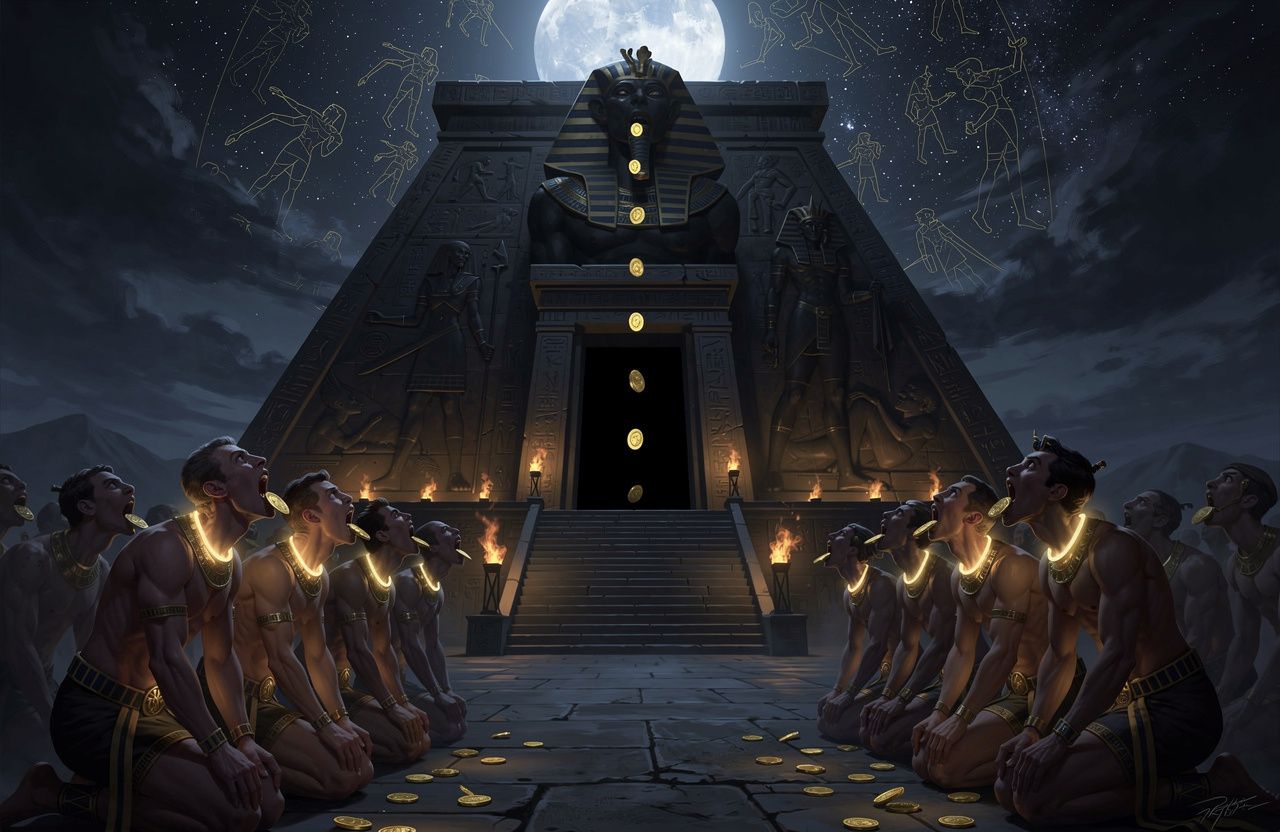
The cheapest way to control a person is not to order them around but to feed them. An order provokes resistance. A paycheck provokes gratitude. And if you pay someone to do exactly what they already enjoy, they'll be sincerely convinced they're free. That's not cynicism, it's just mechanics. And on these mechanics rests an entire industry — the grant industry.
A grant looks like a gift. A foundation gives money to a scholar, a journalist, an activist, a whole university — "for a good cause." Nobody is recruited, nobody signs in blood. A generous donor simply supports important work. And from there begins what an engineer would call a quiet install of dependency.
A grant isn't a gift, it's a subscription
A gift is given once and forgotten. A grant works differently: it's almost always recurring. They fund you this year — next year you have to apply again. And that's where the subtle training kicks in.
To get the next grant, you must report your successes. And what counts as success — the foundation decides. Without noticing, the recipient starts framing their projects to please the donor. Not because they were bribed, but because otherwise the money runs out, and that money pays the staff, the rent, the whole operation.
After a few cycles, the person can no longer tell their interests apart from the foundation's. They sincerely believe that what matters is exactly what gets paid for. In IT this is called training a model: you don't write the rules directly, you just reward it for the answers you want, and it tunes itself. The grant system trains whole communities of people to produce the right answers — without a single order.
Why it beats a bribe
A bribe is a dirty word, and it leaves a trail. A grant is a clean, respectable word, and it leaves gratitude. The difference is enormous.
A bribed official knows he sold out and deep down understands it. A grant recipient is certain he's an honest professional who got lucky with funding. He'll defend the donor's position more fiercely than any mercenary — because he considers it his own. That's the high art of soft power: buying not a vote but convictions.
And the scale isn't one at a time. Through a network of foundations you can fund hundreds of NGOs, thousands of studies, dozens of media outlets — and get a whole ecosystem that, in chorus, sincerely and independently of each other, repeats the needed narrative. Each node is sure it speaks for itself. In fact they're all tuned by one grant auction.
Where fact ends and myth begins
Let's draw the line honestly. Fact: large foundations — from old family ones to new tech-billionaire ones — really do hand out billions in grants and really do shape which topics are considered important and which marginal. Whoever pays for the research often decides which questions get asked at all. This isn't a theory; it's how grant-funded science and media work.
Myth: that every grant recipient is a conscious agent carrying out orders from a secret center. Usually it's softer and scarier. Most are sincere. They simply flow toward where the resource runs, like water downhill. No one orders a river to flow down — you just dig the channel. The foundation digs the channel with money, and people flow the right way on their own, certain they chose the path themselves.
Loyalty as a commodity
Why would anyone spend billions on grants with no direct profit? Because loyalty is an asset worth more than money. If you hold university chairs, influential NGOs, and respected media in your pocket, you can shift public opinion without appearing in a single news story. You don't need to own a TV channel — you just need to own the people who count as independent experts on it.
The book The Architecture of Chaos describes this pattern directly: seize the infrastructure, rename it, use it. A grant doesn't buy slavery — it calls it "partnership," "support," "development." Under a pretty name, the person walks in himself and even says thank you. Isfet, the book says, always hides behind names: call dependency support, and the line forms voluntarily.
Where is the ordinary person in all this
Again in the role of a resource — only now the ore is mined from trust. You listen to an "independent expert" and don't know who pays for his independence. You read an "honest investigation" and don't see whose grant funded it. Your opinion is shaped by people who sincerely believe in what they're paid for — and are therefore especially convincing.
Spotting the channel is already half of freedom. Just ask "who's funding this?" and the pretty picture gains depth. That is naming the mechanism: it strips away its main weapon — invisibility.
The answer: the MAAT token and DAO
The grant machine's strength is that money flows top-down, and whoever sits at the top quietly sets the agenda for everyone below. The recipient depends on the donor and therefore adapts. To break this, you need a resource that flows not from above but from the people themselves, and that no one can revoke as punishment for the wrong opinion.
That is MAAT. The MAAT token is membership in a cooperative with a shared, transparent treasury, where decisions about what matters are made by the participants themselves, not a distant donor. The principle is strict: one human, one vote — not "one dollar, one vote." Governance runs through a DAO — a decentralized organization where every movement of funds is visible to all, and no foundation can buy loyalty on the quiet, because there's no one to buy it from: votes don't sell one by one. The entry is simple: read the book, take the token, get your vote — and stop being the channel through which someone else's money steers someone else's agenda.