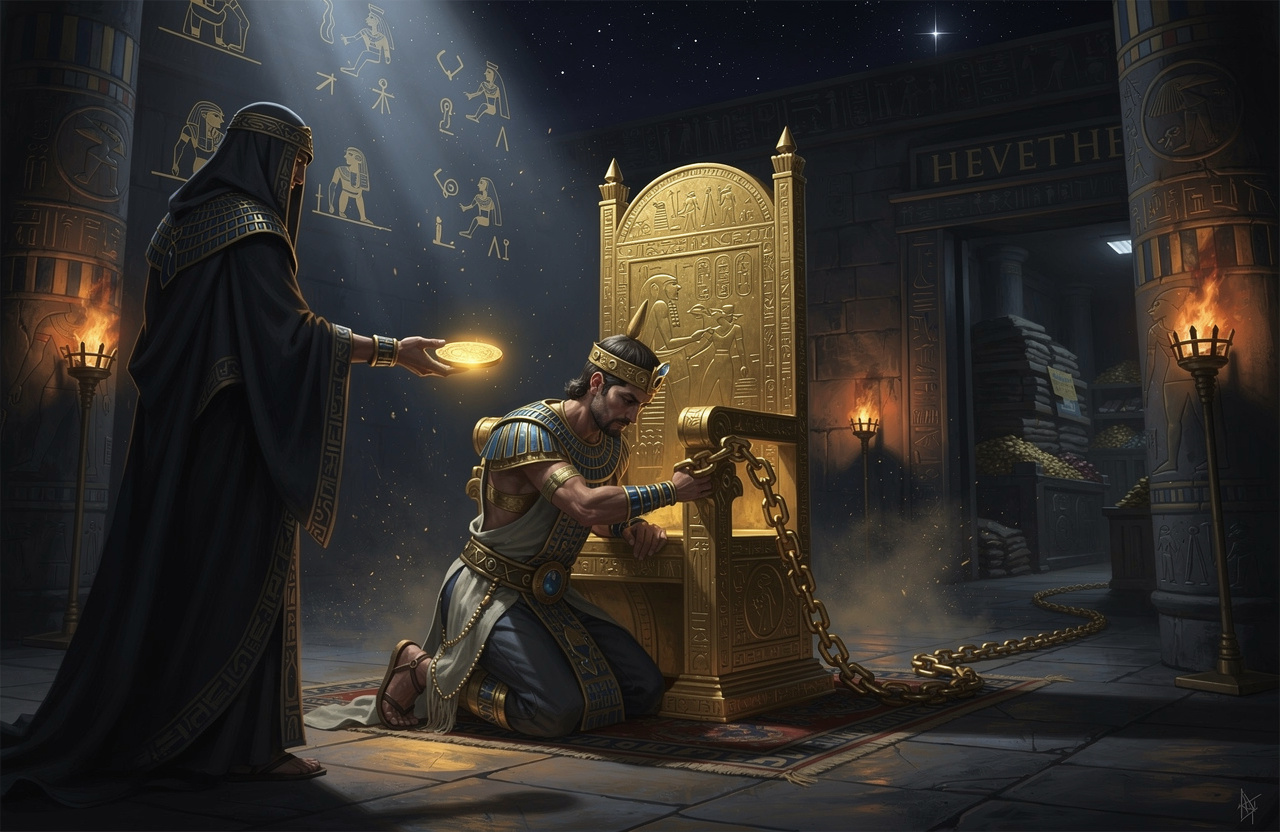
When you hear "the state is in debt," your imagination paints someone powerful the country borrowed from. A big bank? Another country? A mysterious master of the world? The reality is both simpler and stranger. A state almost never borrows from one "someone." It prints IOUs and sells them to all comers — and in who buys those IOUs, and why, hides one of the central riddles of modern power. Let's go step by step, without the jargon.
Step one: the state doesn't "take a loan" — it issues bonds
A country spends more than it collects in taxes. The gap has to be filled. A government won't walk into a bank for a loan like an ordinary person — too small, too clumsy. Instead the treasury issues bonds: essentially paper promises, "I'll repay this much plus interest by such a date." That's the national debt — not one big loan, but a mountain of IOUs.
These bonds are sold on the market. Anyone buys them: pension funds, banks, insurance companies, other countries' central banks, large investment funds, sometimes private individuals. The state gets real money now and, in return, commits to paying interest for years and returning the principal at the end. To return it, it often issues new bonds and pays off the old ones with them. A familiar loop: borrow to repay what was borrowed.
Step two: the interest is the whole point of the scheme
Here lies the heart of it. The debt itself is only half the trouble. The trouble is the interest on it, which the state pays forever. And that interest doesn't go into the void — it goes into the pockets of the bondholders. Which means the country hands over, every year, a huge slice of the budget — money collected from your taxes — to those who had enough capital to buy up its IOUs.
The result is a quiet but powerful pump: citizens' taxes → budget → debt interest → bondholders. The bigger the debt, the bigger this flow, and the less is left for schools, hospitals, and roads. The US dollar, by the way, has lost about 96% of its purchasing power since 1913 (the year the Fed was founded) — and that's part of the same system: the state and the money issuer have learned to live off perpetual debt, while the ordinary person pays for it with a currency that keeps losing value.
Step three: from whom, really
And now the main question — who these holders are. Take it apart and the same names surface. The largest holders of US government debt are the investment giants BlackRock, Vanguard, State Street, plus the central banks of allied countries. Which means the money the state borrows "from the market" largely comes from the very funds that gathered tens of trillions under management out of other people's pensions and savings.
And here an almost comic loop appears. The central bank (the Fed, for instance, is a private consortium, not a ministry) influences the rate at which the state services its debt. And the central bank itself watches the largest holders of that debt. If the money's holders want it to cost more, the rate goes up, debt service gets more expensive, and the state pays more interest to those same holders. One person in the right office can, with a single move of the rate, raise the debt burden of half the planet. Without a single shot and without your consent.
Step four: the same move against whole countries
For a rich country this is a pump. For a poor one it's a trap, and a far harsher one. The scheme described by former economic hit man John Perkins works in steps, like pseudocode: hand the country a huge loan in dollars (not in its own currency!), inflating the forecasts of its growth; make sure it can't repay; wait for default; offer "help" with conditions — privatization, liberalization, devaluation, cuts to social spending; and take the assets for a pittance.
The key bug for the victim is debt in dollars. The country earns in its own currency but owes in someone else's. The Fed raises the rate — the debt automatically grows, even though the country didn't borrow a single new cent. Greece, after the "rescue" of the 2010s, grew its debt from 120% to 180% of GDP — a loan to pay a loan, `while (true) { debt++; }`. Argentina, Sri Lanka, dozens of African countries — the same result: they sell ports, roads, water utilities, land to service a debt that only grows. In a referendum, 61% of Greeks voted against the creditors' terms — the terms were accepted anyway.
Where the ordinary person stands
At the very base of the pyramid. It's his taxes that go to the interest. It's his pension money, handed to the funds, that buys those very bonds — so he is formally one of the creditors, yet the interest goes not to him but to the intermediary who handles his money. It's his schools and hospitals that get shortchanged when the budget drains into debt service. And it's him, when the country falls into the trap, who's made to pay through slashed pensions and roads sold for a pittance. He is at once the source of the money and the one held to account — and yet he gets neither a vote in the decisions nor a share of the flow.
The answer: the MAAT token and DAO
The debt machine is built so the flow always runs one way: bottom to top, from the taxpayer to the bondholder, through an invisible intermediary. The ordinary person loses not because he failed to figure it out, but because his money is pooled and made to work for others' benefit, while he himself is scattered and powerless. So the answer is to gather the flow back — but transparently, and without an intermediary who skims the cream.
That is MAAT. The MAAT token is membership in a cooperative where scattered people combine their strength into a common pool they manage themselves, rather than through a manager who quietly votes their money and takes the interest. Governance runs through a DAO — a decentralized organization with a transparent treasury, where every movement of funds is written in open code and visible to any member. Decisions follow the principle of one human, one vote, not "one dollar, one vote": weight comes from membership, not the size of the capital. Sovereign debt is designed for you to remain a scattered payer at the bottom of the pyramid. MAAT bets on the opposite. The entry is simple: read the book, take the token, get your vote — and stop feeding interest to people you never chose.