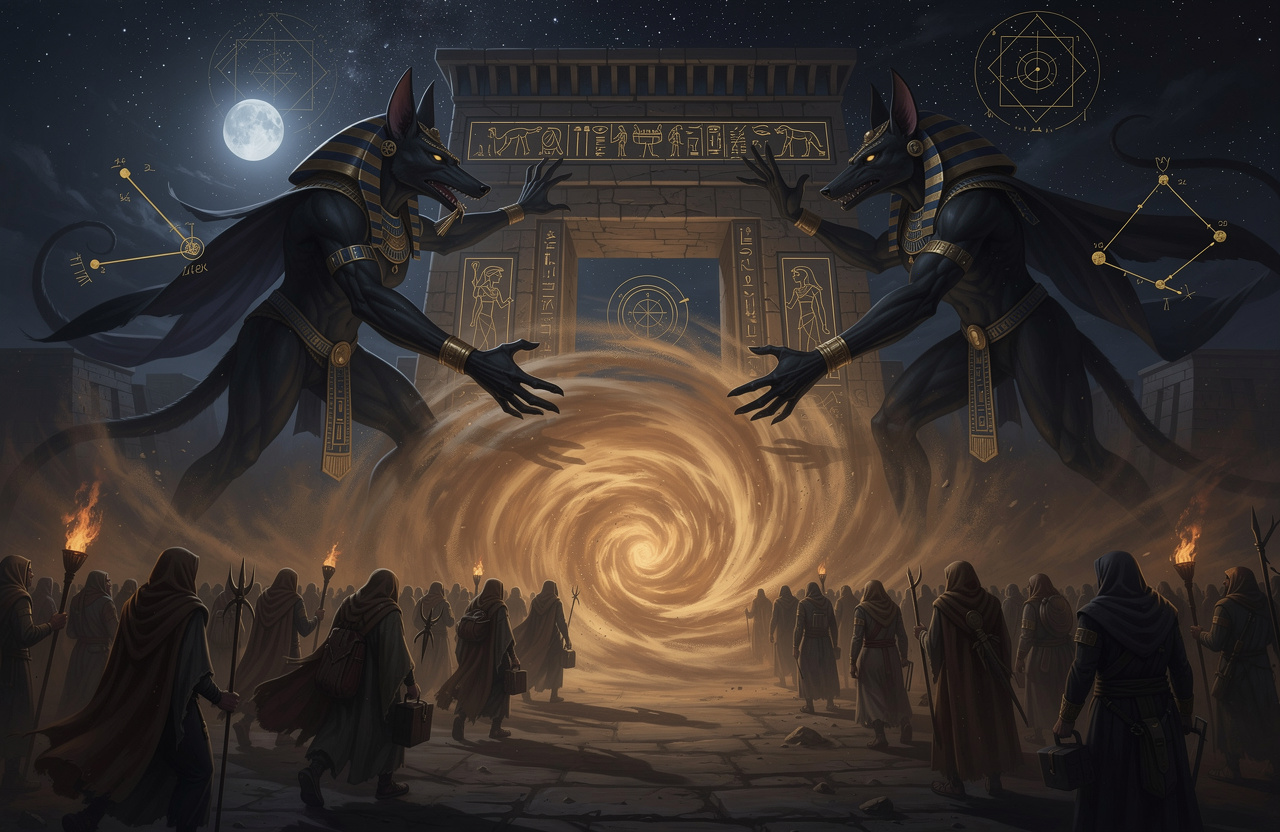
In August 2022, the U.S. Treasury did something it had never done before. It sanctioned a piece of code.
Not a person. Not a company. Not a bank. A set of immutable smart contracts on Ethereum called Tornado Cash. Addresses got added to the OFAC list — the same list that holds terrorists, cartels, and rogue states. Overnight, interacting with those contracts became a crime for anyone under U.S. jurisdiction. GitHub deleted the repository. Circle froze USDC sitting inside the contracts. Developers were arrested.
Stop and feel the weight of that. They didn't sanction a criminal who used the tool. They sanctioned the tool. They sanctioned math that had already been deployed and could never be changed, deleted, or turned off by anyone — including its authors.
That is the precedent. And it is bigger than crypto.
What a mixer actually does
A blockchain is a public ledger. Every transaction is visible forever. Your wallet address is a pseudonym, but the moment anyone links that address to your name — an exchange KYC, a shipping address, a tweet — your entire financial life unfolds in front of them. Every payment. Every balance. Every counterparty. Backward and forward, permanently.
Think about what that means. If someone knows your address, they know your salary, your rent, your donations, your habits, the person you quietly send money to every month. A regular bank sees this too — but a bank doesn't publish it to the whole planet for eternity.
A mixer breaks the link. You deposit a fixed amount into a shared pool. Later you withdraw the same amount to a fresh address. Because thousands of deposits and withdrawals share the pool, no outside observer can prove which deposit maps to which withdrawal. Tornado Cash did this with zero-knowledge proofs — cryptography that lets you prove "I deposited, I have the right to withdraw" without revealing which deposit was yours.
Here's the part they don't tell you: this is not a hack. This is not a loophole. This is privacy working exactly as designed. The same math that protects a dissident protects a thief. A knife cuts bread and cuts flesh. We did not ban knives.
Why it terrified them
Yes — North Korea's Lazarus Group laundered stolen funds through Tornado Cash. That is real, and it is the reason the sanctions were framed the way they were. Don't let anyone tell you the criminal use was imaginary. It wasn't.
But look at the response. They didn't go after the criminals — those are hard to catch. They went after the tool, because the tool sits still and can't run. And in doing so they declared something new: that publishing privacy-preserving code can itself be the offense.
Code is speech. In the 1990s the U.S. government tried to classify strong encryption as a munition and lost that fight — courts ruled that source code is protected expression. Tornado Cash reopened the war. If the state can sanction an immutable contract, it can sanction any protocol it dislikes. The mixer today. The private messenger tomorrow. The open AI model the day after.
Our record. A blockchain is the Scales of Maat — every deed weighed in the open, nothing hidden from the ledger. That transparency is a gift and a trap. Privacy is Ka, the double, the intimate self that must not be exposed to every eye to be judged. Isfet does not fear the Scales. Isfet fears the veil. When the state criminalizes the veil itself, it is not fighting a thief — it is asserting that no soul may stand before the Scales unwatched. The mixer was named a weapon. Names have power. So name this correctly: they did not sanction crime. They sanctioned the right to a private soul.
The chilling effect is the point
You might think: I have nothing to hide, so this doesn't touch me. Wrong altitude. Look up from the single case.
When code can be sanctioned, developers stop writing it. Why build a privacy tool if publishing it lands you on a terror list? The arrest of the developers wasn't about punishing them — it was a message to every other builder on Earth. Legacy security systems have a name for this: fear as a service. You don't need to prosecute everyone. You need one loud example, and a million people self-censor.
That is how a right dies. Not with a law that says "privacy is illegal." With a chilling effect that makes privacy tools too dangerous to build, too dangerous to touch, until they simply stop existing. The single point of failure isn't the code. It's the courage to publish it.
What actually happened next — and the door
Here is the part the doom-merchants skip.
In November 2024, a U.S. federal appeals court ruled that Treasury had overstepped. Immutable smart contracts, the Fifth Circuit found, are not "property" of a foreign national and could not be sanctioned under the statute Treasury used. In March 2025, Treasury removed Tornado Cash from the sanctions list. The code was never deletable. It ran the entire time. The precedent got pushed back — not fully, not finally, but pushed back by people who fought it in the open.
That is the lever. The math cannot be un-published. A protocol that no one controls cannot be switched off — that is the whole point of "immutable." They can raise the cost of touching it. They can jail the people who build it. What they cannot do is make it not exist. Every time they try to un-ring the bell, they prove the bell rings.
So what do you do with this?
- Understand the tool before you judge it. Privacy is not guilt. Assume the burden of proof runs the other way.
- Separate the crime from the code. Punish the launderer. Do not punish the language.
- Support the builders. The developers who write privacy-preserving math are load-bearing walls of a free network. When they're prosecuted for the code itself, that's your fight, not theirs alone.
- Know your chain. Public ledgers are radically transparent by default. If your finances live on one, understand exactly who can read your life.
They sanctioned math and math won the round. Remember that the next time someone tells you the code can't fight back.
Privacy is not the absence of accountability. It is the presence of a self that answers to the Scales — and to no one else.