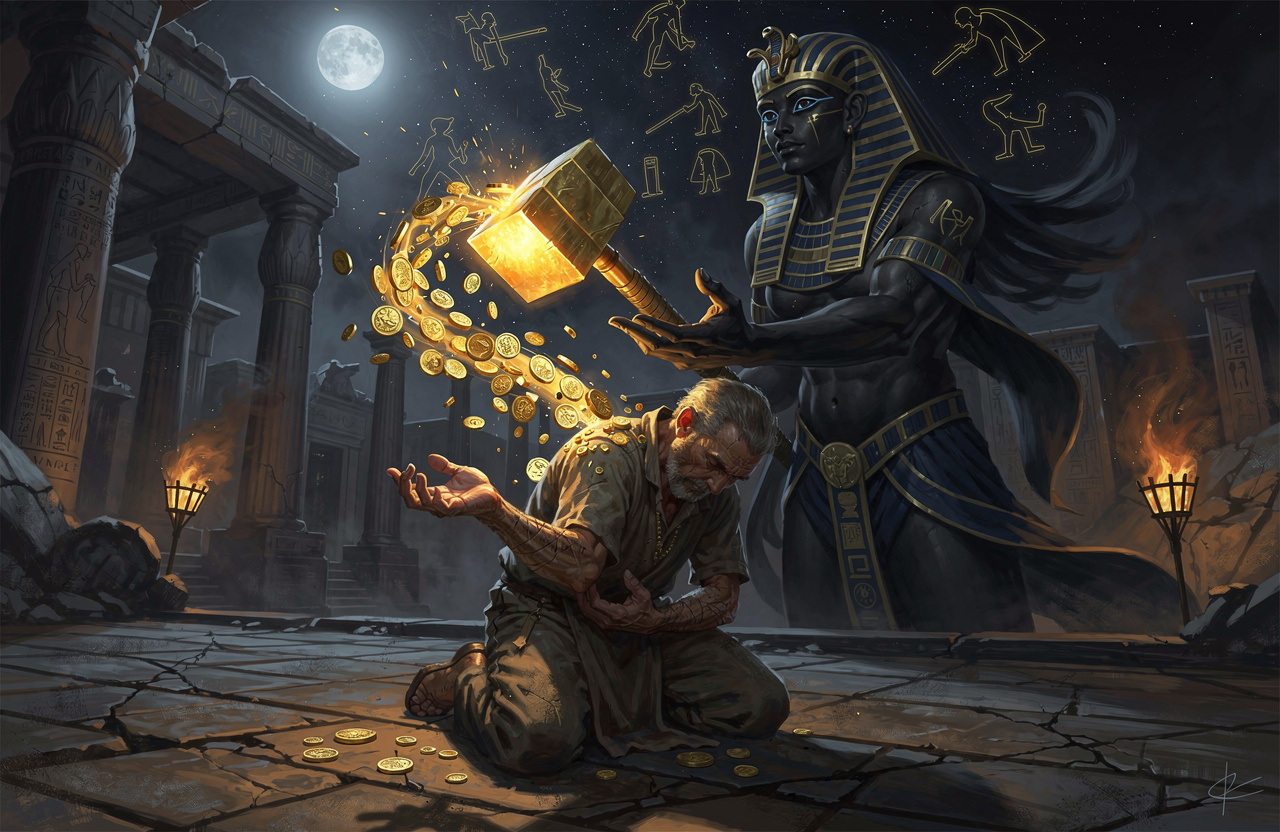
Picture someone who went to work for forty years. Every month a slice of his paycheck was withheld — into a pension fund. He never chose where the money went; it all happened automatically, like a subscription charge. The fund put his contributions into the stocks of large companies. By old age a decent sum had built up. A happy story — until you ask one question: what was that money doing for all forty years?
The answer is unpleasant. It was voting. And it was voting against the very man who saved it.
Your money, someone else's hand
First, the essential point, without which none of this makes sense. When your contributions land in a fund, you become a client. On the shares bought with your money, the manager votes — BlackRock, Vanguard, State Street — not you. You provided the capital. The right to decide went to an intermediary.
And so your money, pooled with the money of millions like you, turns into a huge bloc of votes in every major company. That bloc raises its hand at shareholder meetings. The only question is what it votes for.
What exactly your vote is cast for
The decisions made with those votes sound painfully familiar — because you feel them every day:
- Cut jobs for a prettier quarterly report. The one fired might be your neighbor, or you.
- Raise the price of medicine. The drug company has a monopoly and BlackRock among its shareholders, demanding higher quarterly profit. Prices rise not because the medicine got better.
- Buy back shares instead of investing in wages. It lifts the stock price — and the fund's returns — but never reaches the people who do the work.
- Pay executives hundreds of millions for "optimization" — that is, for firing other people.
The result is a closed loop of absurdity. You save for old age. Your saved money votes to raise the price of your medicine, freeze your wages, and fire you if convenient. And when you finally retire, you meet a world that your own savings helped make harsher. This is not a glitch. It is the design.
Grandma's pennies against a lever over half the world
Compare two stakes in the very same stock. Before 2022, for instance, both Western funds and ordinary pensioners held the same blue-chip shares. Only grandma got her four percent a year (if she was lucky), while the fund earned on the price rise plus a fee on all its trillions. The same share — but arranged so the profit from it flows unevenly.
And it isn't only about money. Half a percent in fees a year on thirteen trillion is sixty-five billion in near-automatic income. But the main thing the fund gets is not the fee — it's the lever. Grandma gets pennies of growth. The fund gets the right to run half the world with her vote. And it advertises this as "ordinary people's access to markets."
Why this is called parasitism
The word "parasite" here is technical, not emotional. The ancient Egyptians would have called this position Isfet: not fairy-tale "evil," but the inversion of fair exchange. A structure that extracts from the system and puts nothing back.
Look at the honest model for contrast. The book offers a simple image: an organization ends up with a surplus of 4.2 million dollars. In an ordinary bank, the board meets behind closed doors, and most of it goes to the CEO as a bonus — 3.8 million. The board voted unanimously. The board was appointed by the large shareholders. The large shareholders are the same funds. Now imagine a cooperative where the same 4.2 million, by transparent vote, goes to someone's mother's operation and someone's son's school. The difference isn't the sum. The difference is who holds the switch that distributes it.
A parasite doesn't "choose to be evil" — it simply latches onto a working organism and takes the resource. And the most dangerous part is how well it mimics. On the outside, a calm man in a suit talking about sustainability. Inside, a structure that votes your money against you.
Where is the ordinary person here
You are the source of the capital and, at the same time, its victim. You paid for this machine twice: once in contributions, once in the fee for having your right to decide taken away. Your vote was collected, packaged, and cast in someone else's favor. And you only find out if someone nearby asks an uncomfortable question.
The good news: since the machine rests on you not using your vote, everything changes the moment you start using it.
What to do about it: the MAAT token and DAO
The strength of this system is the gap between your money and your vote. The money is gathered upward, the deciding is left to an intermediary. So the cure is to sew the gap back shut: return the vote to those whose money it is — transparently, and without an intermediary.
That is MAAT. The MAAT token is membership in a cooperative and a single vote. Not "one dollar, one vote" like the funds, where whoever has more money decides, but one human, one vote. Governance runs through a DAO — a decentralized organization with a transparent treasury where every movement of funds is visible to all. No board behind closed doors will route your surplus into its own bonus — because there are no closed doors.
Today your savings work against you, because someone else votes them. MAAT returns a simple thing: your money should vote for you. The entry is simple — read the book, take the token, get your vote. And, for the first time, raise your hand on the side where you actually stand.