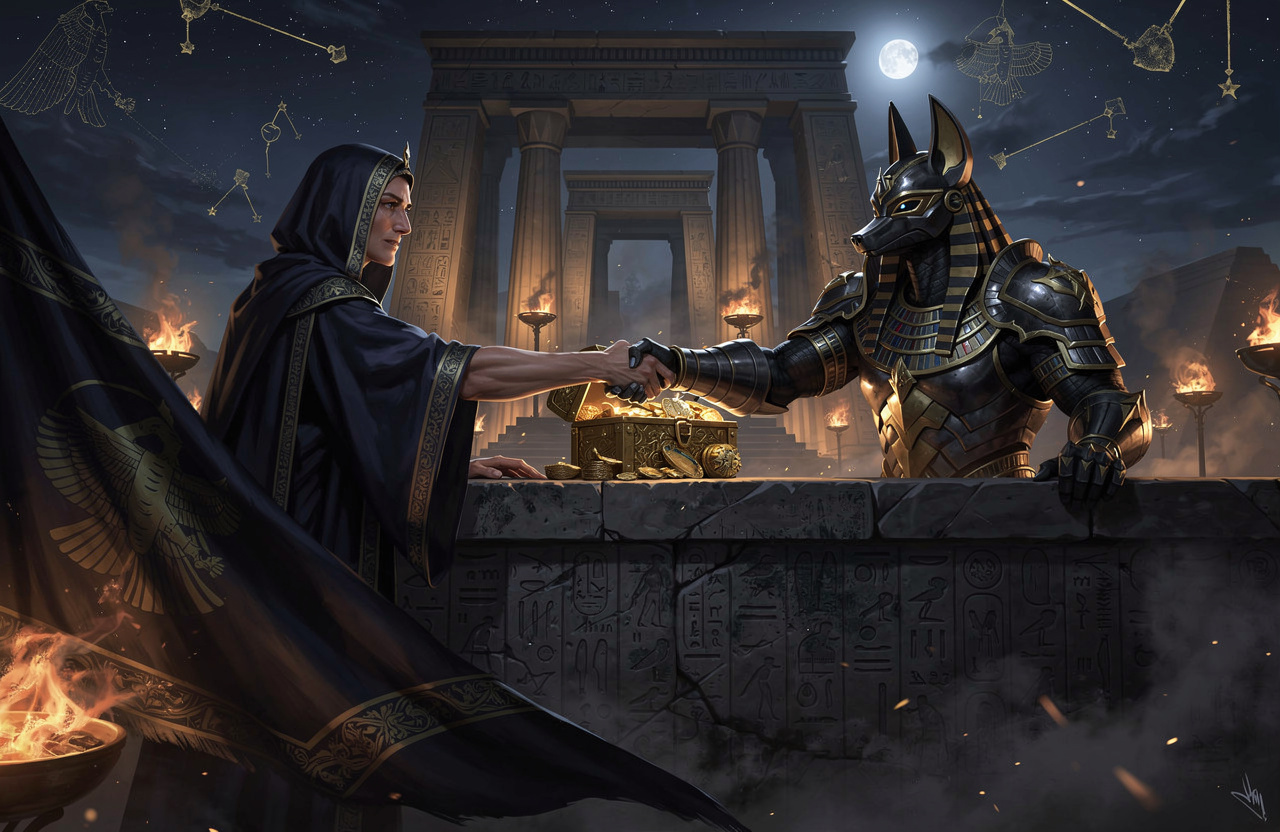
There is a law that sounds like a formality in peacetime and turns into a verdict in wartime. In the United States it is called the Trading with the Enemy Act. It forbids citizens and companies from doing business with a country your nation is at war with. The logic is plain: while your sons die at the front, you do not get to quietly make money on the other side.
In October 1942, at the height of the Second World War, the U.S. government applied that law to a New York bank called Union Banking Corporation. Its assets were frozen. And among the directors of that bank was a man named Prescott Bush — father of the future president George H. W. Bush, and grandfather of George W. Bush.
What Union Banking was
To understand the story, you have to understand the scheme. Prescott Bush was a partner at Brown Brothers Harriman, one of the most respected investment houses on Wall Street. Union Banking Corporation (UBC) was, in effect, a vehicle attached to that house. Bush sat on its board and held its shares.
UBC was not an ordinary bank for ordinary depositors. It was a node in a cross-border network. At the other end of that network stood the Dutch bank Bank voor Handel en Scheepvaart in Rotterdam, and behind it the German industrialist Fritz Thyssen — a steel magnate who in the 1920s and 1930s openly and generously financed Hitler's rise. Thyssen later wrote a book with a telling title: I Paid Hitler.
So the scheme worked like this: Thyssen's German money flowed through the Dutch bank into the American UBC and went to work in the United States. And American capital, in turn, could service German industry through the same pipe. The border between "ours" and "the enemy" did not run along the front line. For the network, the front did not exist at all.
Vesting Order No. 248
When U.S. intelligence unwound this chain in 1942, a document was issued under a dry number — Vesting Order No. 248. Under it, the assets of Union Banking Corporation were treated as "enemy property" and placed under government control. Stakes frozen, shares frozen. Formally, the scandal ended there. The war had to be won, and Brown Brothers Harriman was too embedded in the establishment for anyone to go to prison.
After the war the frozen assets were quietly returned to the shareholders. Prescott Bush received his share — by some accounts around 1.5 million dollars in the money of the time. No trial, no disgrace. The career continued: Bush later became a U.S. senator from Connecticut.
Where fact ends and myth begins
Let's draw the line honestly, the way we always do. Because a great deal of nonsense has grown around this story.
Myth: "The Bush family were secret Nazis who funded Hitler out of conviction." That is untrue and has no verifiable support. Prescott Bush was not an ideologue, did not share the Nazi program, and almost certainly did not sit and count how many tanks would be built with "his" money.
Fact: Prescott Bush genuinely was a director and co-owner of a bank that served as the American node for the capital of a man who financed Hitler. That bank's assets genuinely were frozen under the Trading with the Enemy Act. This is not conspiracy theory — these are declassified documents in the U.S. National Archives.
And here is the important, uncomfortable part. The real lesson of this story is not about Bush villainy. It is that capital organized into a cross-border network does not distinguish between "us" and "the enemy." To it, those are not moral categories but lines on a balance sheet.
Capital does not fight — capital earns
An engineer would put it this way: this network had nodes on both sides of the front, and traffic flowed between them until it was physically cut by a government kill switch. For a state, war is a matter of life and death. For cross-border capital, war is just volatility you can profit from — provided you have nodes everywhere.
Thyssen paid Hitler. Thyssen's money worked in New York. The Americans whose sons landed in Normandy and the Germans building tanks were, to the network, opposite sides of the same single transaction. This is Isfet in its purest form: a structure that extracts profit from the conflict of living people while risking nothing itself. The parasite does not pick a side. It picks the profit.
And this is not a unique Bush case. It is the normal mode of supranational capital — the one we saw with the Rothschilds two centuries ago and see today in any transnational structure. The names change. The architecture does not.
Where is the ordinary person
Everywhere and nowhere. It was his sons dying at the front while money flowed calmly above that front. It was his taxes later paying the interest on the war debt. He is the only participant in a war who cannot "have nodes on both sides." He has one side. One life. One trench.
The network always won precisely because ordinary people stayed scattered loners, tied to their land, their army, their flag. Capital is tied to nothing.
The answer: the MAAT token and DAO
If the strength of these structures is that they are networked across borders and we are not, then the answer is symmetric: ordinary people need their own network — one that also does not depend on a single flag or a single intermediary. Not in order to trade with the enemy, but to stop being the only ones who pay for someone else's deal in both blood and taxes.
That is MAAT. The MAAT token is membership in a cooperative and a single vote, on the principle one human, one vote — not "whoever has more money and sits on both shores at once." Governance runs through a DAO, a decentralized organization with a transparent treasury where every movement of funds is visible to all, and no node can quietly service both sides of the front at your expense. The entry is simple: read the book, take the token, get your vote — and stop being the only one without a spare shore.