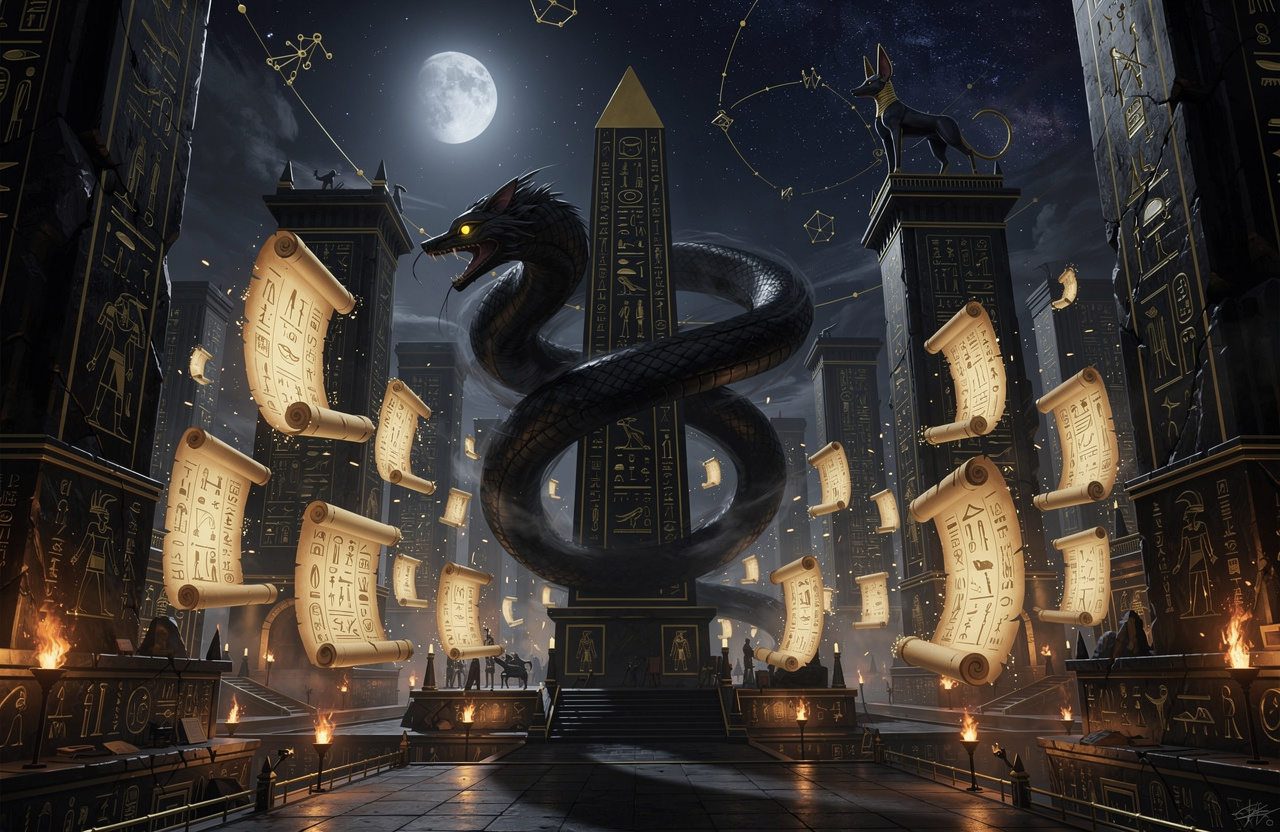
The chokepoint everyone forgets is the one inside your own head. Ports move goods, pipelines move oil, roads move trucks — but platforms move attention, and attention is the raw material from which opinion, belief, and consent are manufactured. Own the pipe that carries what a few billion people see and say, and you own something more valuable than any harbor: the shape of what the public thinks is true. The Ring figured this out too. And it bought in.
You already know the loud version of this story: a billionaire buys a platform outright. Elon Musk taking Twitter private for about $44 billion and turning it into X is the headline everyone saw. But the loud version distracts from the quiet one — the more important one. Behind the visible owner sits a familiar cast of concentrated capital, holding stakes across nearly every media and platform company that shapes what you scroll. The named buyer gets the coverage. The index giants get the position.
Who really sits in the boardroom
Start with the quiet ownership. The major listed media and platform companies — the ones running the feeds, the streaming services, the news networks, the ad exchanges — share the same institutional shareholders as everything else in this series. Vanguard, BlackRock, and State Street sit among the largest holders of the big listed tech and media firms, as they do across nearly the entire S&P 500. When you watch a stream, scroll a feed, or read a headline on a public platform, the company behind it very likely counts the same handful of index managers among its principal owners.
Now the private and hybrid cases, which is where it gets sharper. When Musk bought Twitter, he did not do it alone — the take-private deal was backed by a consortium of co-investors and lenders, a syndicate of funds, banks, and wealthy backers whose money made the purchase possible and who now hold pieces of X. Reddit, before and around its IPO, took strategic investment from large players — including a well-known stake from Chinese tech giant Tencent taken years earlier, alongside venture and institutional money. The point is not any single name. The point is the pattern: the platforms that host public conversation are owned, at the cap-table level, by concentrated capital — venture funds, sovereign money, index giants, billionaire syndicates.
So the "public square" is private property. Every one of these platforms feels like a commons — an open space where anyone can speak. It is not. It is a privately owned venue, governed by an algorithm you cannot read, owned by shareholders you cannot see, tuned toward outcomes you did not choose. The conversation is real. The ownership of the room the conversation happens in is the quietest and most consequential fact about it.
Attention is the asset; the feed is the toll
Here is why media ownership is the crown of the whole Ring, more powerful than ports or pipelines.
Every other chokepoint taxes a thing — a barrel, a container, a mile, a gallon. A media platform taxes your perception. The algorithm that orders your feed decides what you see and what you never see, which stories rise and which vanish, which framing feels like consensus and which feels like a fringe. That is not a toll on goods. It is a toll on reality itself — a filter, owned by concentrated capital, sitting between you and your own picture of the world.
And it compounds with everything else the Ring owns. If the same pool of capital owns the oil pipeline and the platform where energy policy is debated; the private hospital chain and the network where healthcare is discussed; the defense contractor and the feed where the next war is sold — then the flow of goods and the flow of opinion about those goods are held in the same hands. That is not a conspiracy of instructions. It doesn't need to be. It is a structural alignment of interest: the owner of the flow is also, increasingly, the owner of the room where you decide how you feel about the flow.
The genius, as always, is invisibility. You don't experience the feed as ownership. You experience it as "what's happening." The algorithm feels like the world, not like a product tuned by an owner. That is precisely the power: a toll you cannot see is a toll you never fight.
Our Record
The Egyptians understood that the deepest magic was Heka — the creative word, the power of naming and speech to shape reality. To name a thing was to have power over it; to control the words spoken in the temple and the images carved on the wall was to control what the people held as true. The scribe and the priest guarded the word because whoever shapes the word shapes the world the people live inside.
Now weigh the feed. The Shadow Neteru have seized Heka at planetary scale. They own the channels through which the creative word now flows — the platforms where billions speak, and where an unseen algorithm decides which words rise into the shared reality and which sink into silence. To own the feed is to own the modern Heka: the power to shape what a civilization believes is real. This is Apep at its most subtle. It does not need to censor you crudely. It needs only to own the ordering of what you see, and let the filter do the shaping. Isfet as a tuned algorithm is far more powerful than Isfet as a boot.
When the word itself is enclosed, the whole possibility of Ma'at — of a public that can weigh truth against falsehood on a fair scale — is put at risk. You cannot balance the scales if you cannot see the weights.
The lever: own your own signal
Never doom without a door — and here the door is one you can walk through this week, because the media chokepoint has a fatal weakness the others don't: it depends entirely on your attention, and your attention is yours to move.
First, decentralize where you speak and listen. The open protocols already exist — Mastodon, the fediverse, Nostr, Matrix, and other federated networks where no single owner controls the feed and no algorithm secretly tunes your reality. These are the platform equivalent of self-custody: your social graph, your reach, your speech, not rented from a shareholder-owned room.
Second, diversify your inputs deliberately. A single algorithmic feed is a single point of failure for your worldview. Read across sources, follow people directly, use RSS and open tools that show you what you chose rather than what an owner optimized you to see. Break the monopoly on your own perception.
Third, support and build cooperative, transparent, community-governed media — outlets and platforms owned by their readers and users, with open moderation rules and no hidden owner upstream tuning the flow. The same DAO and cooperative logic that returns rent to the people applies to the word: a public square that is actually public, governed in the open by the people who speak in it.
The Ring wants your feed because whoever owns the word owns the world. So take back the word. Speak where no owner filters you, read where no algorithm hides the weights, and build the square in the open. Reclaim your Heka.