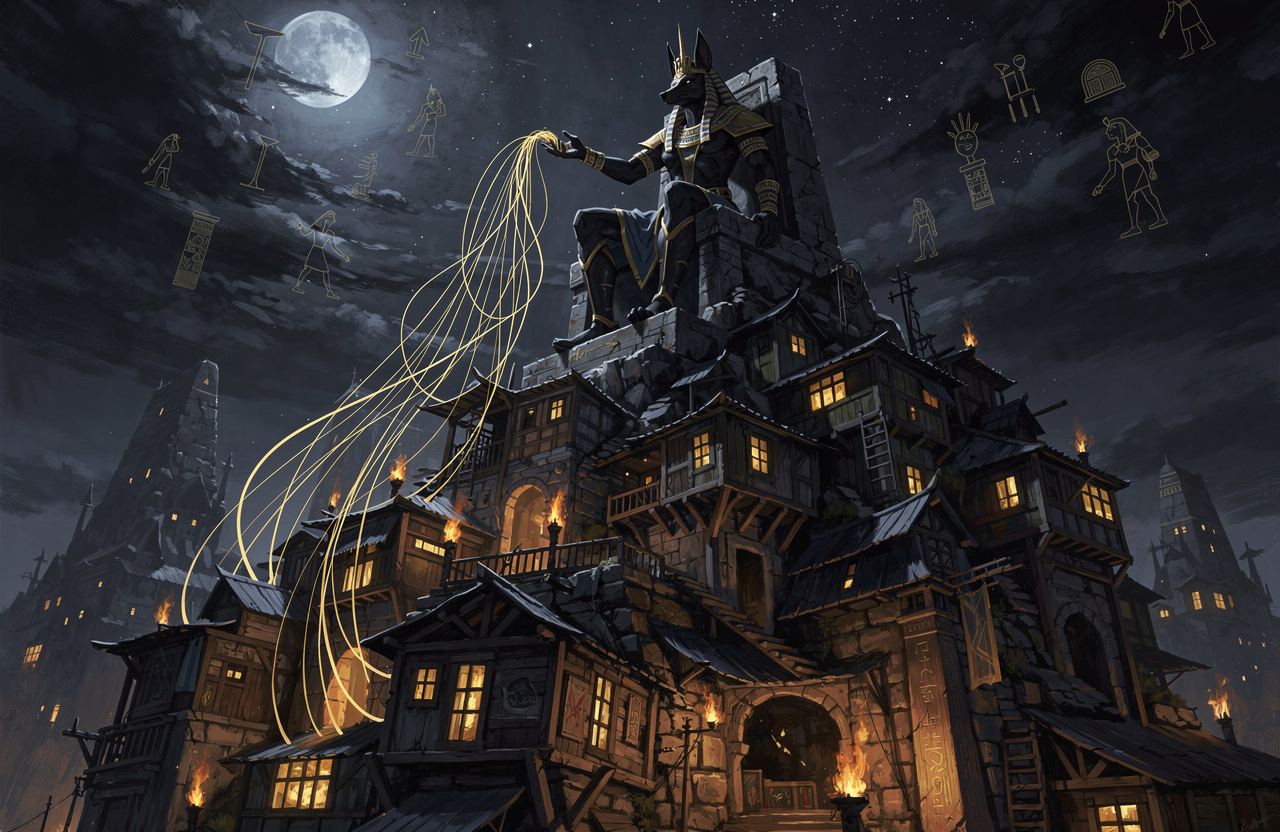
Somewhere a family just paid rent this month. They didn't write a check to a person. They didn't shake a landlord's hand. Their money left their account, passed through a property-management portal, climbed a ladder of shell companies, and landed — quietly, without a name on it — inside a fund managed by Blackstone.
They will never know they pay Stephen Schwarzman. That's the whole design. The largest landlord on the planet is one you were never introduced to.
The man at the top of the ladder
Stephen Schwarzman co-founded Blackstone in 1985 and still runs it. Over four decades he turned a two-man advisory shop into the biggest alternative-asset manager alive — around a trillion dollars under management, a large chunk of it in real estate.
Not real estate the way you imagine it — a guy who owns some buildings. Real estate as an asset class, industrialized. Blackstone's property arm has, over the years, held roughly a trillion dollars' worth of real assets across its cycles: apartments, single-family rental homes bought by the tens of thousands, warehouses, logistics parks, hotels, student housing, data centers, life-science labs. Whole categories of physical space, converted into monthly income streams.
Schwarzman himself is worth tens of billions. But his personal fortune is the small number here. The big number is the one he controls: the roofs, the floors, the doors. The places people live and work, rolled up into funds and rented back to them.
Who pays him every month
Follow the money to its source and you find yourself.
When Blackstone bought tens of thousands of foreclosed American homes after 2008 and stood up a giant single-family rental operation, it created a new fact: a family that once might have bought that house now rents it — from a fund. The mortgage that would have built their equity became rent that builds the fund's returns.
When Blackstone buys the warehouse, the cost of storing every product that passes through it rises a little — and that little lands in the price of everything you order.
When it buys the student-housing block, the eighteen-year-old signs a lease before they've earned a dollar, and the rent flows up the ladder to the fund.
When it buys the office tower, your employer's lease is the fund's cash flow, and it shows up as a line in the budget that decides your raise.
You don't need a Blackstone lease to pay Blackstone. You pay it through the shelf price, through the rent baked into the store, through the office your job sits in. The rent empire doesn't need you as a tenant. It collects from the whole economy at once.
Rent as an operating system
Here's the shift you have to see. The old rich owned things and got richer when the things got more valuable. The new rich own the cash flow — the stream of payments a thing produces — and they engineer it.
Buy the asset with cheap debt. Push the debt onto the asset itself. Raise the rent to the edge of what the market bears. Cut the cost of maintenance to the edge of what people tolerate. Collect the spread. Refinance when rates fall, sell when a bigger fund wants in. The building was never the point. The building is a machine for extracting monthly payments, and Blackstone is the best builder of such machines that has ever existed.
Multiply that by a trillion dollars of assets. That's not a landlord. That's an operating system for rent, running underneath the physical world you walk through every day.
Our record
On the Scales of Maat, there's a clean line between two kinds of wealth. One kind builds — it raises a wall, plants a field, ships a good. The other kind extracts — it inserts itself between you and a thing you already need, and charges you for passage.
Blackstone's rent empire is the second kind, refined to a science. It didn't build the homes; it bought the ones that already stood and turned living in them into a subscription. This is Apep at the level of the ground itself — not chaos as noise, but chaos as a slow leak: your Sekhem, your life-force, drawn off a little every month, upward, into a fund, where it stops being anyone's life and becomes a return.
The Shadow Netjeru's masterstroke is that no face receives it. You can be furious at a person. You cannot be furious at a "diversified real-estate vehicle." The name was removed so the rage would have nowhere to land.
We put the name back. The trillion has an owner, and the owner has a name, and the name is Schwarzman.
The lever
Never doom without a door. Here's the door.
The rent machine has exactly one weakness: it must always be between you and the asset. Cut it out of the middle and the whole thing starves.
- Own the ground under yourself where you can. Every home, every plot, every small commercial space held by the people who use it is one machine Blackstone can never install.
- Pool. A single family can't buy the building. A cooperative can. A land trust can. A DAO holding title to real property can do exactly what Blackstone does — aggregate small money into a hard asset — except the rent comes home to the members instead of climbing the ladder to a fund.
- Refuse the "it's just how it works" story. It's not physics. It's a business model. Business models can be forked.
Blackstone's genius was turning shelter into a stream that flows one way — up. Every structure you build where the stream flows back down to the people inside it is a direct subtraction from the empire.
The largest landlord on Earth counts on you never learning his name. You just did. Now build the thing he can't collect from.