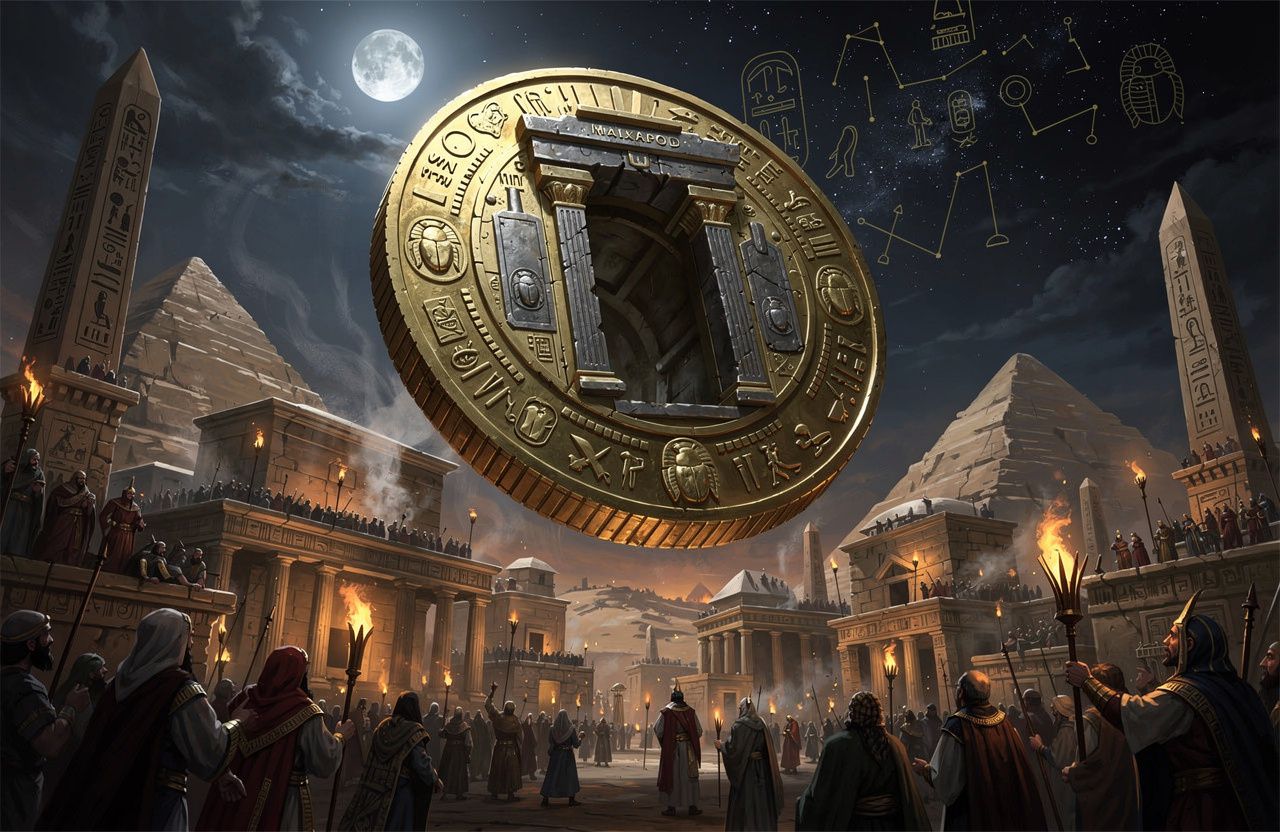
There's a dollar in crypto that isn't a dollar. More than a hundred billion of them circulate. Almost every trade on almost every exchange passes through them. And for years, the single most important question about them — is there really a dollar behind each one? — had no fully audited answer.
That dollar is Tether. Ticker USDT. It is the largest stablecoin on Earth, with a supply in the range of $100–140 billion depending on the day. It is the plumbing of crypto. And it is the biggest systemic risk the space doesn't like to stare at directly.
What Tether actually is
USDT claims to be worth one dollar because, Tether says, every token is backed by a dollar's worth of reserves it holds. Deposit dollars, get USDT. Redeem USDT, get dollars back. Simple promise.
Here's why the promise runs the whole casino. Most crypto trading pairs aren't priced in real dollars — they're priced in USDT. Bitcoin/USDT. Ether/USDT. The thousand altcoins. USDT is the unit traders park value in between bets, move between exchanges, and settle in. It's not one asset among many. It's the reserve currency of crypto — the layer everything else sits on top of.
Now the load-bearing question: if USDT is the dollar of crypto, what is the dollar of USDT? What's actually in the vault?
The transparency that keeps not quite arriving
For most of its life, Tether did not publish a full, independent, top-tier financial audit — the kind a public company must file, from a Big Four firm, with an auditor's name on the line. Instead it offered attestations: a firm confirms that on a given day the reserves were there, without the deeper, ongoing scrutiny of a real audit. A snapshot, not a movie.
The gap mattered because Tether had already been caught short of it. In 2021 the U.S. CFTC fined Tether $41 million, finding that for significant stretches Tether did not hold sufficient fiat reserves to back the USDT in circulation — despite claiming full backing the whole time. Around the same period the New York Attorney General settled with Tether and its affiliate Bitfinex for $18.5 million, over findings that funds had been shuffled to cover a shortfall, and barred them from operating in New York. The regulator's phrase stuck: the claim that USDT was always fully backed was, at times, "a lie."
Since then Tether has published quarterly attestations showing reserves it says exceed its liabilities, holding large amounts of U.S. Treasury bills, and reporting substantial profits. That's real improvement, and worth saying plainly. But a quarterly attestation is still not a continuous, full audit by a top firm. The most important dollar in crypto is backed by a level of disclosure that no ordinary bank of comparable size would be allowed to operate on.
Our record: the Scales of Ma'at only judge truly when both pans are open to the eye. Tether asks you to trust that the second pan is loaded, while keeping a cloth draped over it and lifting a corner once a quarter. Maybe the weight is exactly as claimed. Probably it is. But "trust the covered pan" is the precise posture the whole space swore it was built to abolish. Isfet doesn't always lie. Sometimes it just declines to fully show — and lets your assumption do the rest.
Why this is everyone's problem, not just USDT holders'
You might think: I don't hold USDT, not my problem. Follow the plumbing.
If confidence in USDT cracked — a run, a redemption freeze, a revelation that reserves fell short — here's the cascade:
- Every USDT trading pair reprices at once. Since most crypto is quoted in USDT, a wobble in USDT isn't one asset moving. It's the measuring stick itself bending, and every price measured against it distorting in the same instant.
- Exchanges seize up. Enormous volumes settle in USDT. If it can't be trusted at par, the settlement layer of much of crypto freezes mid-transaction.
- Contagion jumps to Bitcoin and Ether. In a USDT panic, holders flee USDT into hard crypto or out entirely — violent, correlated moves across assets that have nothing to do with Tether's balance sheet.
- It reaches beyond crypto. Tether holds tens of billions in short-term U.S. Treasuries. A forced fire-sale of that pile to meet redemptions would ripple into the Treasury market itself — the most systemically central market on the planet.
That last point is the one regulators actually lose sleep over. A stablecoin that started as a trading convenience is now large enough that its reserve management is a variable in the U.S. government bond market. That's not a crypto story anymore. That's a global-finance story wearing a crypto ticker.
The centralized dollar inside the decentralized dream
Here's the irony worth sitting with. Crypto sells itself as trustless, permissionless, decentralized. And the single most-used instrument in the entire ecosystem is a centralized, privately-issued, opaquely-backed IOU from one company. Tether can freeze your USDT — it routinely blacklists addresses on request. Tether decides who redeems. Tether's balance sheet is the foundation, and Tether's word is a large part of what you have to go on.
The most "trustless" market on Earth runs on the most trust-dependent instrument imaginable. Not your keys, sure. But also: not your reserves. You hold a claim on a vault you're not allowed to fully inspect, issued by a company that a regulator once documented saying the vault was full when it wasn't. That's the quiet single point of failure at the center of the whole trustless dream — the one the pitch decks route around.
What you do with this
Not "USDT is a scam" — it has survived stresses that would have killed a fraud, and its disclosures have genuinely improved. But not "relax," either. Calibrate:
- Know what you're holding. USDT is a claim on a private company's reserves, not a dollar in a bank. Price that in.
- Prefer instruments with fuller disclosure for size and duration. USDC and others publish more granular, more frequent, more audited attestations. For large or long-held balances, transparency is worth a lot.
- Don't keep more parked than you'd accept losing to a freeze. Blacklisting and redemption gates are real, documented tools. Assume they can touch you.
- Watch the reserve reports, not the price. USDT trading at $1.00 tells you sentiment is calm. It tells you nothing about the vault. The vault is in the attestations — read those.
- Demand the audit — loudly, collectively. The single most valuable thing users can force from a systemic stablecoin is a real, continuous, top-tier audit. Transparency isn't a favor issuers grant. It's a standard users impose.
The whole point of a blockchain was to let you verify instead of trust. Tether is the place where crypto quietly went back to trusting. You don't fix that by panicking. You fix it by refusing to look away from the covered pan — and by rewarding, with your money, the issuers who lift the cloth.
Verify the vault, or price the doubt. There's no third option.