Vanguard likes to talk about the long term. About responsible stewardship. About being the good guy of finance — the low-fee, boring, on-your-side index house that just quietly grows your retirement. That's the story. That's the halo.
Now open the holdings.
Vanguard — roughly nine to ten trillion dollars under management — is among the largest shareholders in Philip Morris International and Altria, the cigarette giants. It's a top holder in the gunmakers. It's massive in the fast-food and sugar-water empires — McDonald's, Coca-Cola, PepsiCo, the packaged-junk conglomerates. Tobacco that kills its best customers. Firearms. Foods engineered to be overeaten. The full menu of what public health calls the disease-driving industries. Vanguard sits near the top of the register in a huge swathe of them at once.
Look at that. Then hold it next to the word "sustainability" and feel the two refuse to touch.
Everywhere at once, by design
Here's the mechanic that makes it possible, and it's important you see it clearly, because it's the same mechanic behind the entire Ring.
Vanguard is built on index funds. An index fund buys the whole market — every company in the index, weighted by size, no judgment applied. That's the pitch: cheap, diversified, no stock-picker to pay. The consequence, unspoken, is that Vanguard owns everything. The clean-energy startup and the cigarette maker. The hospital chain and the company giving people the disease the hospital treats. Both sides of every trade, every conflict, every harm. It cannot not own the harmful company, because owning everything is the entire product.
So when Vanguard's marketing gestures at sustainability, at responsible investing, at long-term stakeholder value — understand what it can and cannot mean. It can offer a sub-menu of ESG-labeled funds that screen some names out. It cannot change what the firm as a whole holds, because the firm as a whole is, by design, the whole market — including everything the ESG brochure quietly excludes. The virtue is a filtered view. The reality is total exposure.
And underneath sits the vote. Vanguard is one of the very largest voters at the annual meetings of the tobacco companies, the gunmakers, the junk-food giants. Whatever it says about responsibility, its stewardship desk holds one of the loudest voices inside the very industries the responsible-investing brochure was written to distance you from.
The gap between the word and the shelf
Let's be precise about the con, because it's subtle. Nobody at Vanguard is lying in a way you could sue over. The ESG funds really do screen. The stewardship reports really are published. The long-term language really is sincere-sounding.
The trick is scope. The virtue is scoped to a small, opt-in slice of products. The ownership is scoped to everything. You are shown the slice and invited to feel the halo, while the mass of your money — the default fund, the target-date retirement fund, the whole-market index almost everyone actually holds — sits fully inside tobacco, guns, and engineered food.
It's the greenwashing pattern in its purest form: a genuine, small, honest thing placed in the front window so you never inventory the warehouse. A staging environment that passes every test, in front of a production system running completely different code.
Our record
Weigh it on the scale. On one pan: the word — sustainability, responsibility, the long term, the on-your-side halo. On the other pan: one feather of truth — the same house sits atop the industries that shorten lives for profit.
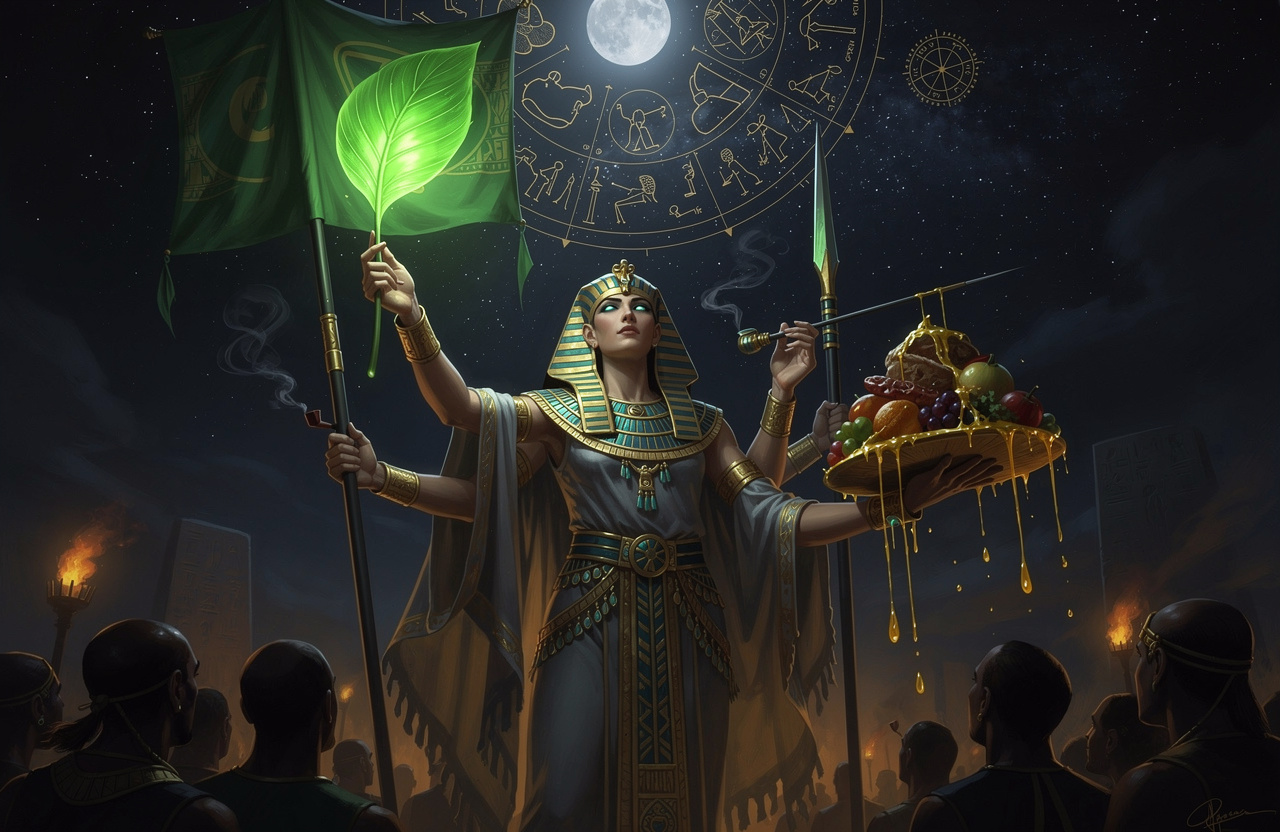
The order of Maat is not squeamish. It does not demand you own nothing that anyone finds objectionable. What it demands is that the word and the deed answer to the same scale — that Heka, the spoken word, not be used to build a feeling the ledger contradicts. Isfet here is not the cigarette or the gun; those are just products in a fallen market. Isfet is the split: the sustainability language routed to your feelings while the ownership routes to the harm, so that your genuine wish to do less damage becomes the very thing that keeps you comfortable holding maximum damage. The pump takes your conscience as fuel and gives you back a halo.
Name the split — word here, holdings there — and the halo can no longer hover over the warehouse.
Where the lever is
Do not read this as you can never invest cleanly, so why bother. Read it as: the label is decoration; the holdings list is the truth; and you can read the truth in two minutes.
Inventory the warehouse, not the window. Every fund publishes its full holdings. Before you trust any "responsible" or "sustainable" label, pull the actual list. If the halo and the ledger disagree, believe the ledger. Always the ledger.
Choose the scope on purpose. If you want genuinely screened exposure, you have to opt into the specific screened product — and then verify it actually screens. The default is total exposure. Nothing lands you in the clean slice by accident; the accident lands you in tobacco.
Reclaim the vote. Where pass-through voting is offered, use it. If your capital is going to sit in these companies through the whole-market index, at least don't hand the stewardship desk the voice attached to your shares to cast across the sector on your behalf.
Build treasuries where the mandate is a rule, not a mood. In a transparent, member-governed, on-chain structure, what the pool holds is legible and votable — not a marketing scope drawn by the firm that owns Altria. The mandate stops being a brochure and becomes verifiable code.
Vanguard's halo is real and thin — a filtered view over total ownership. See the whole warehouse. Then decide, deliberately, which shelf your Sekhem is allowed to sit on.
Balance the scale. Trust the ledger, not the label.