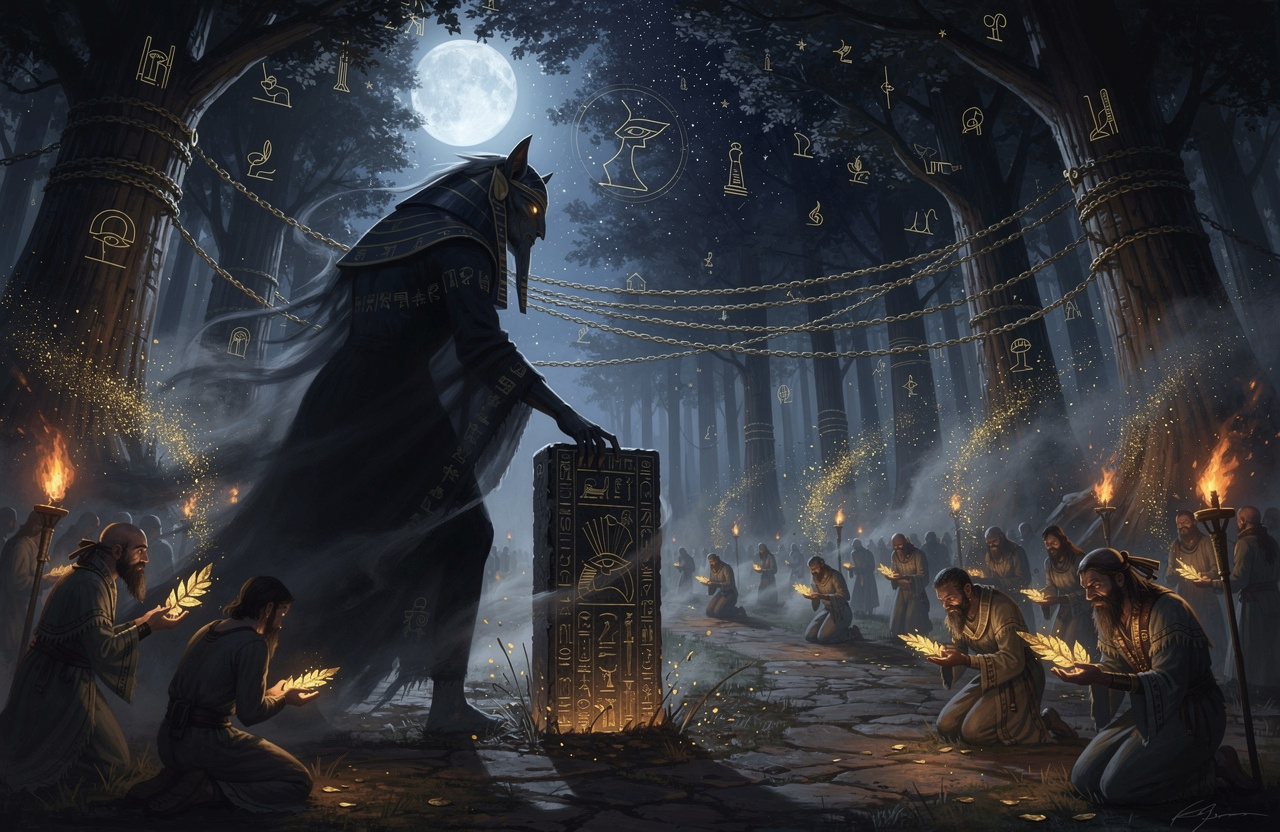
Somewhere right now, a forest that has stood for a thousand years just became a financial instrument. Nothing was cut. No road was built. On paper, nothing changed — the trees still stand, the moss still grows. But a title moved, a credit was issued, and the right to breathe near those trees now has an owner.
This is the quietest enclosure of our lifetime. Not gold, not oil, not data. Air. The one thing everyone assumed could never be fenced. And "green" funds are fencing it, right now, and selling the fence back to us as salvation.
How a forest becomes a rent
Follow the mechanism, because the mechanism is the whole trick.
Step one: buy or lease a large tract of forest — cheaply, often in the Global South, often land where local and indigenous communities have lived for generations without a Western title deed. Step two: declare that you are "protecting" it, "avoiding deforestation," "preserving a carbon sink." Step three: an accreditation body issues carbon credits — certificates representing tons of CO2 supposedly not emitted because you promised not to cut. Step four: sell those credits to corporations that want to keep polluting while calling themselves net-zero.
Now look at what actually happened. The forest already existed. It was already absorbing carbon, for free, for everyone, forever. You changed nothing physical. But you inserted yourself as a toll booth between the tree and the atmosphere. You created a rent on a process that was a commons. The airline still flies, still burns fuel, still emits — and now pays you for the privilege of a clean conscience, and you pay the forest nothing, because the forest was already doing the work.
The land grab wearing a leaf
Here's the part that curdles. This isn't fringe. Large institutional players — asset managers, sovereign-linked funds, specialist "natural capital" and timberland vehicles — are moving serious money into forests, farmland, and "nature-based assets." The same logic that concentrated ownership of companies is now pointed at land itself, dressed in green.
And the people already on that land? Investigations across carbon-offset projects have repeatedly found the same pattern: communities restricted from their own forests, traditional use criminalized, benefits flowing outward to distant investors while the locals who actually kept the forest alive for centuries get fenced out — sometimes literally. The carbon-credit map and the colonial extraction map, laid over each other, line up far too well.
Our record. In the old tongue there is Nun — the primordial water, the undifferentiated source that belongs to no one because it is the ground of everyone. A forest is Nun made green: a common source of breath, of Sekhem, poured out freely. What the carbon market does is the signature move of Isfet — it draws a line around the free source and installs a gate. It doesn't create the life-force. It taxes it. The Shadow Neteru rarely destroys the commons outright; that would be noticed. It privatizes the commons while claiming to protect it — and collects rent on breath itself. Enclosure with a halo.
Why "green" is the perfect disguise
Every enclosure in history needed a story. The old ones said "the King grants this land." This one says something far more effective: "we are saving the planet."
That's what makes it so hard to fight. Object to fencing the forest and you sound like you're against saving forests. The moral framing is the armor. But strip it off and the numbers ask ugly questions. How many of these credits represent forests that were never actually in danger of being cut — "protection" you'd have gotten for free? How many double-count the same carbon? How much of the money reaches the ground versus the intermediaries, the verifiers, the funds, the brokers stacked between the polluter and the tree?
When a market lets a corporation keep emitting and lets an investor collect rent on land and calls the whole arrangement climate action — ask who's actually breathing easier. It usually isn't the atmosphere, and it usually isn't the people who live in the trees.
The lever
Never doom without a door — and this door is wide open, because the tools to fix this exist and are being built right now.
The scam depends on two things: opaque accounting and a trusted middleman. You have to believe the credit is real, that the forest was genuinely at risk, that the ton of carbon was genuinely avoided — because you can't check. The verifier checks, and you trust the verifier, and the fund trusts the verifier, and everyone's incentive is to keep the credits flowing.
Break the opacity and the whole thing has to become honest. Put the forest on a public, auditable ledger — actual satellite-verified measurements, transparent methodology, every credit traceable to a specific piece of ground, every payment visible all the way down to the community that stewards the land. No more trusting the middleman; verify the source. That's not sci-fi — transparent, on-chain environmental registries are being built precisely to route the value to the forest and its people instead of to the toll booth.
So do the concrete thing. When a company brags about "carbon neutral," ask whose forest, verified how, and who got paid. Support open, transparent registries over black-box offset markets. And hold the deeper line: the commons — air, water, forest, the primordial Nun — is not a product. It cannot be honestly owned, only stewarded. Anyone selling you the right to breathe is selling you back something that was always yours.
They fenced the air and called it rescue. Name the fence.
The commons remembers who it belongs to. Everyone. Keep it that way.